Archive for February, 2024

Automate Financial Processes and Optimize Cash Flow with NetSuite

In today's fast-paced business landscape, efficient financial management is crucial for sustaining growth and achieving long-term success. For businesses of all sizes, managing cash flow, monitoring expenses, and ensuring compliance with financial regulations can be complex and time-consuming tasks. However, with the right tools and technology in place, these challenges can be overcome.

Enter NetSuite, a comprehensive cloud-based ERP (Enterprise Resource Planning) solution that empowers businesses to automate financial processes and optimize cash flow like never before. we'll explore how NetSuite can revolutionize your financial operations, helping you streamline processes, gain real-time insights, and drive business growth.

The Challenges of Traditional Financial Management:

  • Manual data entry: Repetitive tasks like data entry are inefficient and susceptible to errors, impacting the accuracy and reliability of financial reports.
  • Lack of automation: Time-consuming processes like invoice processing, bill payments, and reconciliation slow down operations and limit growth potential.
  • Limited visibility: Siloed data and fragmented systems restrict access to real-time financial insights, hindering informed decision-making.
  • Inefficient cash flow management: Delayed payments, inaccurate forecasts, and manual processes lead to poor cash flow visibility and potential liquidity issues.

Why NetSuite?

NetSuite is a leading cloud-based ERP system trusted by thousands of businesses worldwide. It offers a wide range of features and functionalities designed to streamline financial processes, improve visibility, and enhance decision-making. Here are some key benefits of using NetSuite for financial management:

  1. Integrated Platform: NetSuite provides a unified platform that combines financial management, CRM, e-commerce, and other essential business functions. This integration eliminates the need for multiple disparate systems, enabling seamless data flow across departments and improving overall efficiency.
  2. Automation: With NetSuite, manual financial tasks such as data entry, reconciliation, and reporting can be automated, saving time and reducing the risk of errors. Automated workflows ensure that processes are executed consistently and efficiently, allowing your finance team to focus on strategic initiatives.
  3. Real-time Insights: NetSuite offers real-time visibility into your financial performance, allowing you to monitor key metrics, track expenses, and identify trends as they emerge. Customizable dashboards and reports provide actionable insights, empowering you to make informed decisions and drive business growth.
  4. Scalability: NetSuite is designed to scale with your business whether you're a small startup or a large enterprise. As your operations grow and evolve, NetSuite can easily accommodate changing needs, ensuring that your financial management processes remain efficient and effective.

Optimizing Cash Flow with NetSuite

Effective cash flow management is essential for the financial health and stability of any business. NetSuite provides powerful tools and capabilities to help you optimize cash flow and improve liquidity. Here's how:

  1. Cash Forecasting: NetSuite's cash forecasting functionality allows you to accurately predict future cash inflows and outflows based on historical data and current trends. By gaining visibility into your cash position, you can proactively manage liquidity and make informed decisions to support your business objectives.
  2. Accounts Receivable Management: NetSuite streamlines the accounts receivable process, enabling you to automate invoicing, track customer payments, and manage collections more efficiently. With features such as automated reminders and customer portals, you can accelerate cash inflows and reduce DSO (Days Sales Outstanding).
  3. Accounts Payable Automation: NetSuite simplifies accounts payable management, automating invoice processing, approval workflows, and payment execution. Streamlining the AP process allows you to optimize vendor relationships, take advantage of early payment discounts, and improve cash flow management.
  4. Working Capital Optimization: NetSuite offers advanced analytics and reporting capabilities to help you optimize working capital and reduce excess inventory and receivables. By identifying areas for improvement and implementing strategic initiatives, you can free up cash for investment in growth opportunities.

Beyond Automation: A Suite of Empowering Tools:

NetSuite isn't just about automation; it's about empowering you with a comprehensive suite of tools:

  • Scalability unbound: Growing pains? No problem. NetSuite adapts seamlessly to your expanding business, supporting your evolving needs and future aspirations.
  • Customizable to your core: Forget off-the-shelf solutions that don't quite fit. NetSuite tailors itself to your unique business processes and industry requirements, ensuring a perfect match.
  • Fort Knox-level security: Breathe easy knowing your sensitive financial data is protected by robust security measures, allowing you to focus on driving your business forward.
  • Freedom to manage on the go: Manage finances and tasks from any device, anytime, anywhere. This newfound flexibility empowers you to stay on top of things, regardless of location.

The Tangible Rewards of Automation:

NetSuite's impact goes beyond mere automation; it delivers tangible results:

  • Cost savings that sing: Streamlined operations, minimized errors, and automated tasks translate to significant cost savings, freeing up resources for strategic investments.
  • Accuracy you can trust: Ditch the data entry demons and embrace reliable financial data. Make informed decisions with confidence, knowing your numbers are rock-solid.
  • Faster financial close, more free time: Say goodbye to month-end stress. NetSuite's automation magic accelerates processes, giving you back valuable time and resources.
  • Optimized cash flow, maximized potential: Gain real-time visibility and control over your financial lifeblood. Make strategic decisions based on clear insights, maximizing cash flow and minimizing risk.
  • Data-driven decisions, fueled by insights: Gain access to powerful data and actionable insights, empowering you to make informed financial choices that propel your business towards sustainable growth.

Conclusion

In today's competitive business environment, efficient financial management is critical for success. NetSuite provides a comprehensive solution to automate financial processes, optimize cash flow, and drive business growth. By leveraging the power of NetSuite, you can streamline operations, gain real-time insights, and make informed decisions to achieve your financial goals. Whether you're a small startup or a large enterprise, NetSuite offers the scalability and flexibility to support your evolving needs and unlock new opportunities for success.

Ready to Ascend to Strategic Clarity?

Don't let outdated, manual processes host you in the financial fog. Embrace the future of finance with NetSuite. Schedule a demo today and experience the transformative power of automation. Unlock optimized cash flow, streamline your operations, and gain the strategic clarity you need to reach new heights of success.
10 Must-Have NetSuite Cloud Accounting Software Features

In the ever-evolving landscape of business, cloud accounting software has become a cornerstone for organizations aiming to streamline financial processes and enhance overall efficiency. NetSuite, a robust cloud-based financial management solution, stands out for its comprehensive set of features. we'll explore the 10 must-have features that make NetSuite Cloud Accounting Software an indispensable tool for businesses seeking optimal financial management.

NetSuite Cloud Accounting revolutionizes traditional accounting practices by offering a comprehensive suite of tools accessible from anywhere with an internet connection. From financial management to revenue recognition, NetSuite streamlines processes and provides real-time insights for informed decision-making.

Why NetSuite Features Matter:

In a dynamic business environment, having the right tools can make all the difference. NetSuite's features are designed to address common pain points in accounting, such as manual data entry, disparate systems, and lack of visibility. By leveraging these features, businesses can improve efficiency, accuracy, and scalability.

Exploring the Top 10 Must-Have Features:

1. Unified Financial Platform:

NetSuite's strength lies in its ability to unify various financial processes seamlessly. A must-have feature is its capacity to automate key financial processes and provide real-time visibility into financial data. This unified platform eliminates silos, ensuring that finance staff can handle tasks without navigating to different interfaces.

2. Core Financials:

NetSuite's core financial application is a powerful catalyst for updating, creating, changing, and continuously improving company operations. It efficiently manages crucial accounting and financial functions, ensuring regulatory compliance. The feature provides a clear and concise overview of essential information, offering unparalleled visibility and control.

3. General Ledger:

The highly customizable General Ledger in NetSuite empowers organizations to tailor the application to their precise financial needs. Its reporting features and comprehensive audit functions offer unparalleled flexibility for managing an organization's finances on a global scale.

4. Accounts Receivable:

NetSuite's comprehensive Accounts Receivable solution empowers finance managers to manage and anticipate company growth effectively. It automates and streamlines the accounts receivable cycle, offering seamless integration with other financial processes.

5. Accounts Payable:

Built-in Accounts Payable processes save valuable time and boost productivity by automating essential tasks like invoice processing, payment management, and expense tracking. Streamlining these operations optimizes efficiency, minimizes errors, and enhances financial control.

6. Tax Management:

NetSuite's comprehensive tax management feature simplifies domestic and global tax compliance. With an intuitive user interface and robust reporting capabilities, businesses can generate accurate tax reports and streamline tax processes.

7. Fixed Assets Management:

This feature assists with asset maintenance, insurance, and the management of asset depreciation. It supports companies tracking large properties, plants, and equipment.

8. Cash Management:

NetSuite's Cash Management feature helps companies manage cash globally in real time, providing the treasury department with the ability to make strategic plans based on real-time reports of bank accounts, liquidity, and compliance.

9. Payment Management:

Track payments seamlessly within NetSuite, gaining real-time access to disbursement data for online sales and invoices.

10. NetSuite Advanced Financials:

Streamline your workflow and reduce manual effort by implementing automated billing processes. NetSuite's Advanced Financials allow customization of billing schedules and templates for effortlessly generating automatic invoices for different types of orders.

Conclusion:

NetSuite Cloud Accounting Software stands as a comprehensive solution for businesses seeking optimal financial management. The 10 must-have features discussed above encompass a wide range of capabilities, from unifying financial processes to advanced financial tools for a streamlined workflow. Embracing NetSuite ensures that businesses have the necessary tools to navigate the complexities of financial management and drive sustained growth and success. Whether you're a small startup or an established enterprise, these features make NetSuite an indispensable asset in the quest for financial excellence.

FAQs

Q: What are the system requirements for NetSuite Cloud Accounting Software? 

A: NetSuite is a cloud-based solution, requiring a standard web browser and internet connection. It's compatible with popular browsers such as Chrome, Firefox, Safari, and Edge.

Q: Can NetSuite integrate with other third-party applications? 

A: Yes, NetSuite offers robust integration capabilities with a wide range of third-party applications, streamlining various business processes.

Q: How does NetSuite ensure data security? 

A: NetSuite prioritizes data security with industry-leading measures, including encryption, access controls, and regular security updates.

Q: What kind of customer support does NetSuite provide? 

A: NetSuite offers 24/7 customer support via phone and online help center. The support team is well-equipped to assist with any issues or inquiries.

Q: Is NetSuite suitable for small businesses? 

A: Yes, NetSuite caters to businesses of all sizes, providing scalability to adapt to the evolving needs of small, medium, and large enterprises.

Internal Audit Vs. External Audit: Key Differences You Must Know

Audits often come across as fearsome, yet they play a pivotal role in any economy. They reveal the finances, warn of dangers, and check for legal compliance. In general, there are two types of audit namely: internal audit and external audit when it comes to talking about audits. While both serve important roles, they differ significantly in terms of purpose, processes, and outcomes.
For an entrepreneur running any business, it is necessary to know the disparity between an internal audit and an external audit. This will help you choose the right audit for your company. It will ensure its financial records are authentic and reliable.

What is an Internal Audit?

An internal audit is an in-house check of your company's operations, finances, and policy compliance. It’s conducted by your own employees or a hired internal audit team that reports directly to management. The goal is to improve. We must find weaknesses and recommend changes to internal processes.

Think of an internal audit as your company’s personal health check. Like a health check, internal audits can prevent future problems. They catch issues early, such as inefficiencies, risks, or non-compliance. The key thing to note is that internal audits are more of an advisory role rather than purely compliance-focused.

Key Objectives of Internal Audits:

Operational Efficiency: Internal audits show top management how well the company uses its resources. It examines various departments and investigates if there are areas that can be improved in terms of process. The goal is to avoid wasting time, resources, and money. We want to ensure peak performance.

Risk Management: Auditors find threats that may harm the organization. Financial, operational and legal risks are part of this group. They can help avoid or reduce them even before they escalate by spotting them early enough. Their early interpretations provide good results. They help maintain corporate security and stability over time.

Compliance: A company must follow all regulations. They may come from the government, industry standards, or its own policies. Internal audits must comply with these. All of these include safety standards as well as other kinds of legal requirements. Staying compliant avoids fines, penalties and other legal problems.

Continuous Improvement: The internal audit has one major role in recommending how to improve the business. Auditors do not only identify problems but also come up with ways to resolve them. In the long term, such suggestions help a company grow. They do this by streamlining processes or replacing old systems with new ones.

What is an External Audit?

In contrast, an external audit is a neutral review of your financial statements and documents. This type of auditing is performed by an external auditor who is not related to the company. The main purpose of an external audit is to assure shareholders, investors and regulators. It checks that the financial information of the firm is genuine and without a serious error.
On the other hand, external audits are required for many firms while internal audits are not mandatory. This applies particularly to publicly quoted companies. It gives an objective examination of your finances and operations. They ensure legal compliance in terms of accounting principles, regulations and standards.

Key Objectives of External Audits:

Financial accuracy: External audits are obliged to ascertain that the financial statements of a certain organization are valid as well as depict correctly its financial well-being. This means checking if the figures match and reflect the company's true finances. It helps in making sure there are no errors or misrepresentations in such documents.

Compliance with standards: External auditors check if an organization follows GAAP or IFRS. The reason why it matters is that these standards promote consistency and transparency in economic reports. These guidelines show the world that the company is doing things right. They make its economic documents more credible.

Independent Opinion: External audits can analyze a company's financial statements. They offer an unbiased view. Because of their lack of direct connection to the firm, external auditors’ opinions are impartial. This gives stakeholders, like regulators and investors, confidence in the data. They have faith in it.

Trust and Credibility: An external audit builds trust among investors, regulators, and the public. The firms' objective assessment of the numbers gives everyone peace of mind. It proves their financial practices are beyond doubt or reproach. Such an image is essential for attracting investors and staying respectable.

Key Differences Between Internal and External Audits

1. Purpose

Internal Audit: The main aim of an internal audit is to assist the company in enhancing its daily operations. It checks for risks, existing processes, and a smooth flow. This function is more of an ongoing one that aims at giving useful suggestions.

External Audit: External audits focus on assessing the organization’s financial statements. Their goal is to provide an independent opinion on whether the accounts are accurate and if legally permissible.

2. Who Conducts the Audit?

Internal Audit: Internal audits are usually done by the organization's employees, like an internal audit team. On occasions, outsiders may be brought into companies but such auditors still report back to the top management team in charge of it all.

External Audit: An external audit is done by an independent third party, mostly a CPA (Certified Public Accountant) firm. They do not have any links with the corporation, which guarantees impartiality in their assessment.

3. Reporting

Internal Audit: The management or board of directors are informed about the outcomes of an internal audit. The audit team suggests ways to improve the organization's internal controls.

External Audit: External audit reports are given to individuals who are not part of the company, such as shareholders, investors and regulatory bodies. These reports contain the auditor's opinion. It may be unqualified (clean), qualified, or adverse, depending on the findings.

4. Scope

Internal Audit: An internal audit can entail anything within a company. It considers financial procedures, risk management, and efficiency, among others. It is therefore flexible enough for organizations to choose the areas they want to concentrate on.

External Audit: External audits are more specific. They mainly review financial statements. This is to confirm they conform to accounting standards. Its rigid nature favors financial accuracy over other aspects.

5. Frequency

Internal Audit: A business may choose to do internal audits as frequently as monthly, quarterly or yearly. In some cases, use internal audits for ongoing evaluation and improvement.

External Audit: Normally external audits are conducted annually. This is mandatory for listed companies mandated by regulatory bodies or people with an interest in them.

6. Areas of Concentration

Internal Audit: Internal audits aim to optimize internal processes. They will identify various risks, enforce controls, and suggest improvements to operations.

External Audit: An external audit checks accounting documents. It ensures they are complete and comply with laws, like bookkeeping standards.

7. Regulation and Standards

Internal Audit: There is no obligation for internal audit to adhere strictly to any outside set of guidelines or regulations at all times. They base their guidelines on some company policies and best practices from industry leaders. So, they are more adaptable than their external counterparts.

External Audit: External audits must follow well-established criteria. These are the GAAS and the ISA. They are the Generally Accepted Auditing Standards and the International Standards on Auditing. They may also include specific national rules. This keeps uniformity in terms of results and reliability concerning them.

8. Autonomy

Internal Audit: Internal auditors may lack independence. They work for the enterprise or its contractors. It is often the case that their objectivity is influenced by the fact that they report either to management or the audit committee.

External Audit: There is total independence in external auditors. Their lack of ownership ensures their opinions are unbiased and objective. This independence is essential in establishing confidence among outside parties.

Significance of Both Audits

Although each has its own purpose, internal and external audits are both critical parts of an organization’s governance and compliance structure.

Internal Audits Help With:

The identification of potential risks and inefficiencies at an early stage.
Continuous process improvement and enhancement.
Promoting a culture of accountability and transparency within the organization.

External Audits Help With:

Correct your financial statements, and assure external parties that they are accurate.
Meeting accounting standards, as well as regulatory requirements.
Building confidence among investors, shareholders, and regulators.

Advantages of Internal Audit

Ongoing Surveillance: Constant internal audits serve as a means of tracking what goes on in the organization. Hence, one is able to identify any possible risks and take action before it is too late.

Tailored Services: Organizations have different needs. So, internal audits can be customized to meet them. They mainly look at areas that are more prone to risk and those that matter most.

Institutional Knowledge: Internal auditors know the organization and its industry. They're familiar with its operations and environment. Therefore, their insights are more appropriate and helpful.

Cost Efficient: Internal audits are usually cheaper than external ones. They are conducted by people who work for the company itself.

Advantages of External Audit

Independence and Objectivity: External auditors give an objective and unprejudiced appraisal of the financial statements of any organization. This leads to transparency and credibility.

Regulatory Compliance: External audits enable organizations to abide by laws and regulations that apply to them. For instance, listed companies are required by law to have their accounts audited annually.

Stakeholder Confidence: Stakeholders feel secure owing to the external audit reports. These may include investors, lenders, and regulators. Such reports inform them of the organization's finances and its regulatory compliance.

Specialized Expertise: Often, external auditors possess advanced knowledge in certain sectors or disciplines. This is helpful for organizations experiencing complicated issues regarding fiscal reporting or adherence.

Choosing the Right Audit Partner

Both internal and external audits are important. They maintain the health and integrity of your business. Internal audits help you improve your operations from within. External audits provide an independent assessment of your finances. They ensure compliance and build trust with external stakeholders.
Using both types of audits in your business strategy will help. It will ensure efficiency, reduce risks, and maintain compliance levels. This will also help you build trust and credibility.
We Global FPO can help you with both audits. We will ensure your firm stays on the right path. Yes! We can help you set up an internal audit system. Or, we can find someone to do an external review of your finances.
Contact us today for details on how our audit services can assist you in running your company!

9 Reasons to Switch to NetSuite for Better Accounting

In the ever-evolving landscape of business technology, staying ahead of the curve is crucial for sustained growth and efficiency. Traditional accounting software, while once reliable, may now be holding your business back. Enter NetSuite, a cloud-based financial management solution that has been revolutionizing the way organizations handle their finances. In this blog, we’ll explore nine compelling reasons why you should consider making the switch from your traditional accounting software to NetSuite.

1. Tailor-Made Solutions for Your Business:

Selecting NetSuite over traditional accounting software becomes a strategic move due to its remarkable customizability. This feature allows you to align the software with the specific needs of your business or industry. NetSuite’s user-friendly interface complements its customization features, ensuring a seamless adaptation to your business processes without the hassle of integrating third-party software.

2. Adapting to Business Growth:

NetSuite is designed to evolve alongside your business. As your business expands and introduces new products and services, NetSuite seamlessly accommodates the increased complexity. Unlike basic accounting software that may struggle to manage a growing business, NetSuite ensures you can effortlessly handle the growing sophistication of your operations.

3. Comprehensive Business Management:

While traditional accounting software focuses solely on accounting operations, NetSuite goes beyond by offering a comprehensive solution for managing all aspects of your business. From order management and inventory to CRM and eCommerce functions, NetSuite provides an integrated platform. Integrating various business functions in traditional accounting software can be less seamless compared to the unified approach NetSuite offers.

4. Real-Time Visibility and 360-Degree Analytics:

NetSuite stands out for providing real-time visibility and robust analytics, offering a complete 360-degree view of your business. Traditional accounting software may manage specific aspects, but it falls short of delivering a holistic view. NetSuite ensures you have up-to-the-minute insights into your business operations, enabling informed decision-making.

5. Global-Ready and Technology Adoption:

NetSuite facilitates the adoption of new technologies seamlessly, making it ideal for businesses expanding globally. Whether you’re entering international markets or incorporating new technologies, NetSuite allows for easy adoption. Unlike traditional processes that involve manual data entry for global solutions, NetSuite simplifies the process with a single click.

6. Robust Security Measures:

While traditional accounting software boasts security features, NetSuite takes security to the next level. With features like role-based access control, idle disconnect, IP address restrictions, and 256-bit encryption, NetSuite employs best practices for password security. This ensures a robust safeguarding of sensitive information.

7. Transparent Audit Trail:

NetSuite enhances the audit trail process by providing comprehensive information on every financial transaction. Whether payments are made through bank transactions, cheques, or cash, NetSuite enables you to maintain a transparent and auditable trail, essential for regulatory compliance and internal audits.

8. Regulatory Compliance Made Easy:

Staying compliant with ever-changing regulations is a significant challenge for businesses. NetSuite simplifies this process by allowing easy adjustments to conform to new requirements. Unlike running accounting software independently, businesses on NetSuite can quickly adapt to regulatory changes, ensuring ongoing compliance.

9. Cost-Effectiveness and Tailored Options:

Despite the misconception that ERP software is costly, NetSuite provides cost-effective alternatives. Options like NetSuite Success Starter Edition cater specifically to small and medium businesses. Business owners can choose specific functions, such as NetSuite Accounting or NetSuite CRM, making it a tailored and budget-friendly solution. The initial investment proves worthwhile when considering the multitude of benefits of accounting software.

Conclusion:

From increased accessibility and scalability to advanced reporting and enhanced security, NetSuite provides a comprehensive platform to meet the evolving needs of modern businesses. Making the switch to NetSuite could be the transformative step your business needs for efficient financial management and sustained growth.

FAQs

Q1: How is NetSuite different from traditional accounting software?

A: NetSuite stands out with cloud-based accessibility, a unified financial platform, scalability, and comprehensive business management features, offering real-time visibility and enhanced security.

Q2: Can NetSuite adapt to evolving business needs?

A: Yes, NetSuite seamlessly accommodates growing complexities as businesses expand, making it a scalable solution that evolves alongside changing requirements.

Q3: Is NetSuite customizable for specific business needs?

A: Absolutely, NetSuite’s high customizability allows tailoring to exact business requirements, eliminating the need for third-party integrations and ensuring quick adaptation.

Q4: How does NetSuite ensure data security?

A: NetSuite employs robust security measures such as RBAC, idle disconnect, IP restrictions, and encryption, providing superior data protection compared to traditional accounting software.

Q5: What functions does NetSuite cover besides accounting operations?

A: NetSuite includes order and inventory management, CRM, and eCommerce functions, going beyond traditional software’s focus solely on accounting operations.

How Caseware Audit Software Transforms Auditing Processes

In the intricate realm of financial auditing, where precision and efficiency dance in tandem, Caseware Audit Software emerges as a transformative force, reshaping the landscape of auditing processes. This blog delves into the multifaceted facets of this cutting-edge software, exploring how it orchestrates a symphony of functionalities to elevate auditing to unprecedented levels of accuracy and effectiveness.

Unveiling the Canvas

Before embarking on the journey through the transformative capabilities of Caseware, let’s lay the groundwork by comprehending the essence of this sophisticated audit software. Caseware stands as a robust digital ecosystem designed to transcend the limitations of traditional audit methodologies. Far beyond a mere tool, it embodies a comprehensive approach to audit management, integrating advanced features to streamline the entire auditing lifecycle.

1. Seamless Workflow Integration

Caseware’s prowess lies in its ability to seamlessly integrate with existing workflows, creating a harmonious symphony of data management. The software’s intuitive design ensures a frictionless transition from conventional audit practices, allowing auditors to navigate complex financial landscapes with unparalleled ease. This integration acts as a catalyst, fostering collaboration and coherence within audit teams.

2. Dynamic Data Analysis

One of the standout features of Caseware is its dynamic data analysis capabilities, transcending the static confines of traditional auditing tools. Caseware empowers auditors to dissect financial complexities with surgical precision, unraveling intricate threads of data and transforming them into actionable insights. This dynamic approach not only expedites the audit process but also elevates the depth and accuracy of financial examinations.

3. Risk Management Redefined

In the intricate dance of auditing, risk management is a critical partner, and Caseware takes the lead in redefining this partnership. By deploying advanced algorithms and predictive analytics, the software identifies potential risks with acuity, allowing auditors to proactively address issues before they evolve into challenges. This foresight transforms auditing from a reactive process to a proactive strategic endeavor.

4. Collaborative Audit Environment

Caseware serves as a nexus for collaborative audit endeavors, transcending the geographical boundaries that often constrain traditional audit processes. The software’s cloud-based architecture fosters real-time collaboration, enabling audit teams spread across the globe to contribute seamlessly to the audit narrative. This collaborative ethos not only enhances efficiency but also enriches the diversity of perspectives brought to the auditing table.

5. Regulatory Compliance Mastery

In the labyrinthine landscape of regulatory compliance, Caseware emerges as a guiding light, providing auditors with a robust toolkit to navigate the intricate maze of regulations. From ensuring adherence to international accounting standards to seamlessly adapting to evolving regulatory frameworks, Caseware becomes the compass that ensures audits stay on course amidst the ever-changing regulatory currents.

6. Document Management Symphony

A symphony of audit records unfolds within Caseware’s document management capabilities. Auditors traverse a landscape where documents harmonize effortlessly, ensuring a meticulous record of every audit step. From financial statements to compliance documentation, Caseware’s document management module orchestrates a seamless flow, minimizing the risk of oversights and elevating the reliability of audit records.

Conclusion

In conclusion, the transformative impact of Caseware Audit Software on auditing processes is nothing short of revolutionary. It transcends the conventional boundaries, redefining how auditors approach their craft. From dynamic data analysis to collaborative environments, from risk management mastery to regulatory compliance navigation, Caseware stands as a beacon in the realm of audit software, illuminating the path toward unparalleled precision, efficiency, and excellence in financial auditing.

FAQs

Q1: What is Caseware Audit Software?

A: Caseware Audit Software is a comprehensive digital solution designed to streamline and enhance financial auditing processes.

Q2: How does Caseware integrate with existing workflows?

A: Caseware seamlessly integrates with existing workflows, ensuring a smooth transition and fostering collaboration within audit teams.

Q3: What sets Caseware apart in terms of data analysis?

A: Caseware excels in dynamic data analysis, providing precise insights that expedite the audit process and enhance accuracy.

Q4: How does Caseware redefine risk management in auditing?

A: Caseware redefines risk management by using advanced algorithms and analytics to proactively address potential risks.

Q5: Can Caseware support a collaborative audit environment?

A: Yes, Caseware fosters a collaborative audit environment with its cloud-based architecture, enabling real-time collaboration among audit teams.

10 Latest Trends in Management Accounting You Need to Know

In the dynamic realm of management accounting, staying ahead of the curve is paramount to success. As businesses adapt to ever-changing economic landscapes and technological advancements, management accountants must continually evolve their strategies to remain relevant and effective. With the increasing complexity of global markets and the growing emphasis on sustainability and responsible business practices, management accountants play a pivotal role in guiding organizations towards long-term success. In this comprehensive guide, we delve into the top 10 trends shaping the field of management accounting today.

1. Digital Transformation: Embracing Technology for Efficiency

In addition to cloud computing and AI, management accountants are also leveraging blockchain technology to enhance data security and transparency. The adoption of integrated enterprise resource planning (ERP) systems enables seamless integration of financial data across departments, facilitating more accurate reporting and analysis. With the rise of robotic process automation (RPA), routine tasks such as data entry and reconciliation can be automated, freeing up time for strategic analysis and decision-making. Emerging technologies like machine learning are enabling management accountants to predict future trends and anticipate potential risks with greater accuracy.

2. Strategic Cost Management: Maximizing Value Creation

Through activity-based costing (ABC), organizations can allocate costs more accurately based on the actual resources consumed by each activity, leading to more informed pricing decisions. Value stream mapping techniques help identify inefficiencies in processes, allowing management accountants to implement targeted cost-saving measures and improve overall operational efficiency. By adopting lean accounting principles, organizations can eliminate waste and non-value-added activities, optimizing resource utilization and enhancing profitability. Strategic cost management extends beyond internal operations to encompass supplier relationship management (SRM), fostering collaboration and driving cost reductions throughout the supply chain.

3. Risk Management: Proactive Identification and Mitigation

Scenario planning and stress testing enable organizations to assess the potential impact of various macroeconomic factors on their financial performance, allowing for more effective risk mitigation strategies. Enterprise risk management (ERM) frameworks provide a structured approach to identifying, assessing, and responding to risks across the organization, ensuring a comprehensive risk management strategy. Through the use of key risk indicators (KRIs), management accountants can monitor potential risks in real-time, enabling timely interventions to mitigate their impact. Internal controls play a crucial role in risk management by ensuring compliance with regulations and policies, mitigating the risk of fraud, and safeguarding organizational assets.

4. Sustainability Reporting: Integrating Environmental and Social Metrics

The adoption of environmental, social, and governance (ESG) criteria in investment decisions is driving demand for transparent sustainability reporting among organizations. By measuring and reporting on carbon emissions and other environmental metrics, organizations can demonstrate their commitment to mitigating climate change and minimizing their environmental footprint. Social impact reporting allows organizations to showcase their contributions to community development, diversity and inclusion, and employee well-being, enhancing their reputation and stakeholder trust. Integrated reporting frameworks such as the Global Reporting Initiative (GRI) enable organizations to provide a comprehensive view of their financial performance alongside their environmental and social impact.

5. Integrated Performance Management: Aligning Objectives Across Functions

Balanced scorecards facilitate the alignment of strategic objectives across departments by translating the organization’s vision and mission into specific, measurable goals. Key performance indicators (KPIs) provide a quantitative measure of progress toward organizational objectives, enabling management accountants to track performance and identify areas for improvement. The adoption of real-time performance dashboards enables management accountants to monitor performance metrics continuously, facilitating agile decision-making and course correction. By fostering a culture of transparency and accountability, organizations can ensure that performance metrics are communicated effectively across all levels of the organization, driving alignment and accountability.

6. Agile Budgeting and Forecasting: Flexibility in a Dynamic Environment

Rolling forecasts enable organizations to adapt their financial projections quickly in response to changing market conditions, providing greater agility in resource allocation and planning. Zero-based budgeting (ZBB) challenges traditional budgeting assumptions by requiring justification for all expenses, fostering a culture of cost-consciousness and strategic resource allocation. Beyond Budgeting principles advocate for decentralized decision-making and dynamic resource allocation, empowering frontline managers to respond quickly to changing business needs.

The adoption of predictive analytics in budgeting and forecasting enables organizations to forecast future financial performance with greater accuracy, facilitating proactive decision-making and risk management.

7. Data Security and Privacy: Safeguarding Sensitive Information

Encryption technologies such as end-to-end encryption and tokenization help protect sensitive financial data from unauthorized access during transmission and storage. Access controls and user authentication mechanisms ensure that only authorized personnel have access to sensitive financial information, reducing the risk of data breaches and insider threats. Regular security audits and penetration testing help identify vulnerabilities in IT systems and applications, enabling organizations to address security weaknesses proactively. Employee training programs on data security best practices raise awareness among staff about the importance of safeguarding sensitive financial information, reducing the risk of human error and negligence.

8. CFO as Strategic Partner: Driving Organizational Performance

The CFO’s role extends beyond financial stewardship to include strategic planning and execution, collaborating with other executives to align financial objectives with overall business goals. Financial modeling and scenario analysis enable CFOs to assess the financial impact of various strategic initiatives, guiding decision-making and resource allocation. Through mergers and acquisitions (M&A) analysis, CFOs evaluate potential growth opportunities and assess their financial viability, supporting strategic decision-making and risk management.
Capital allocation strategies ensure that financial resources are allocated efficiently to projects and initiatives that maximize shareholder value and support long-term growth objectives.

9. Remote Work and Virtual Teams: Adapting to the New Normal

Virtual collaboration platforms such as Zoom and Microsoft Teams facilitate seamless communication and collaboration among remote teams, fostering productivity and teamwork. Remote work policies and flexible work arrangements empower employees to achieve work-life balance while maintaining productivity and performance standards. Virtual team-building activities and social events help foster a sense of belonging and camaraderie among remote team members, enhancing collaboration and morale. Remote leadership training equips managers with the skills and tools needed to effectively lead and manage remote teams, ensuring continuity and productivity in a virtual environment.

10. Continuous Learning and Professional Development: Staying Ahead of the Curve

Online learning platforms such as Coursera and LinkedIn Learning offer a wide range of courses and certifications to help management accountants stay updated on the latest trends and best practices. Professional networking events and industry conferences provide opportunities for management accountants to connect with peers, share insights, and stay abreast of industry developments. Mentorship programs pair experienced professionals with junior staff, providing guidance, support, and opportunities for knowledge transfer and career development. Industry research and whitepapers offer valuable insights into emerging trends and best practices, enabling management accountants to stay ahead of the curve and drive innovation within their organizations.

Conclusion

The field of management accounting is undergoing rapid transformation driven by technological advancements, evolving business landscapes, and changing stakeholder expectations. From embracing digital transformation and strategic cost management to prioritizing sustainability reporting and continuous professional development, management accountants must navigate a complex landscape while staying ahead of the curve. By embracing these top 10 trends and leveraging them to drive innovation, efficiency, and strategic value creation, organizations can position themselves for success in an increasingly competitive global marketplace. As management accountants continue to adapt and evolve in response to emerging challenges and opportunities, their role as strategic partners and drivers of organizational performance will become increasingly critical in shaping the future of finance and business.

FAQ’s

Q1. What is management accounting?

Management accounting involves the process of analyzing financial information to support decision-making, planning, and control within an organization. It focuses on providing insights to internal stakeholders, such as management and executives, to facilitate strategic decision-making.

Q2. How do management accountants contribute to digital transformation?

Management accountants contribute to digital transformation by leveraging advanced technologies such as cloud computing, artificial intelligence, and data analytics to streamline processes, improve efficiency, and drive insights for better decision-making.

Q3. Why is strategic cost management important?

Strategic cost management is important because it enables organizations to optimize resources, enhance value creation, and maintain competitiveness in the marketplace. By identifying cost drivers and implementing cost-saving measures, organizations can improve profitability and allocate resources more effectively.

Q4. What are the key components of risk management in management accounting?

The key components of risk management in management accounting include identifying potential risks, assessing their impact, developing proactive strategies to mitigate exposure, and implementing internal controls to safeguard organizational assets and maintain financial stability.

Q5. How does sustainability reporting benefit organizations?

Sustainability reporting benefits organizations by demonstrating their commitment to environmental and social responsibility, enhancing stakeholder trust and reputation, and providing transparency into their sustainability efforts. It also helps organizations identify opportunities for improvement and align with evolving stakeholder expectations.

Q6. What is integrated performance management?

Integrated performance management involves aligning objectives across departments and functions by integrating financial and non-financial metrics to gain a holistic view of organizational performance. It enables organizations to drive strategic alignment, enhance decision-making, and improve overall performance.

California SDI Wage Rules & Limits | Global FPO

The majority of individuals who work or reside in California must be aware of the SDI (State Disability Insurance) scheme. Notably, from 2024, the country will be removing the SDI wage base, which will bring about a lot of changes for pregnant and working women in California. In this blog, we will discuss all the aspects of California SDI, why it matters, and what will change for you after 2024 when the SDI wage base is removed.

What is California SDI?

California came up with the State Disability Insurance (SDI), which pays temporary wages to workers absent from employment due to non-occupational sickness, physical injury, or maternity. The SDI program is administered by the California Employment Development Department (EDD). The SDI program also entails the paid family leave (PFL) program, which enables people to take time off work to care for a sick family member or to bond with a new child.

Every year, there is a limit referred to as the “SDI wage base” that determines the portion of a worker’s salary that is taxable. The wage base for the year 2023 was $153,164, meaning that employees were only liable for paying SDI taxes on income earned up to this threshold.

Why is California SDI Important?

SDI plays a crucial role in providing a financial safety net for California’s workers. Here’s why it’s so important:

Financial Support During Hardship: SDI ensures that employees who are unable to work due to illness, injury, or family leave still receive some income to meet their financial needs.
Broader Coverage: Unlike other disability insurance, SDI covers a wide range of temporary conditions, including maternity leave and mental health issues, offering more comprehensive protection.
Legal Requirement: SDI is mandatory in California, meaning all eligible employees must participate unless their employer offers an approved alternative plan (Voluntary Plan Disability Insurance or VPDI).

Why Was the California SDI Wage Base Eliminated in 2024?

The decision to do away with the SDI wage base in 2024 is a necessary action geared towards achieving more equity and sustainability in the system. The following are some of the major causes of this change:

Higher Contribution: The removal of the wage base cap means that higher earners will contribute more towards the SDI fund, creating a healthier fund to address the increasing population and rising healthcare demands in California.
Improved Benefits: The state’s objective is to enhance the level and the period of SDI and PFL benefits. However, such improvements require increased revenue, which will be realized by the abolition of the income ceiling on SDI contributions.
Economic Considerations: The wage base elimination ensures that SDI rates increase in tandem with SDI economic issues, such as wage inflation and inflation of the general costs. This adjustment will make it possible for the program to also be able to cover the rising living expenses and health expenditures in California.

How Does the Elimination of the SDI Wage Base Impact Workers?

The removal of the maximum limit on wages subject to SDI taxes will automatically translate to “sacrifices” by the California workforce, particularly those on higher incomes, in terms of their contributions to the SDI program.

Higher Contributions for High Earners: With the introduction of the removal of the ceilings, there would be additional contributions from such individuals, as all their wages will be taxed under the SDI regime.
Increased Funding for SDI Benefits: The other extra contributions that high-wage earners will put in place will enhance the SDI fund and will create room for improvement in coverage, such as offering more leave days or increasing payment amounts.
Minimal Impact on Lower Earners: In the case of employees whose earnings fall below the previous wage base, their contributions will remain pretty much the same.

Read Blog- Understanding IRS Mileage Rates for 2024-2025

What Changes Should Employers Expect with the SDI Wage Base Removal?

Additionally, employers will have to make changes to their payroll operations due to the abolition of the SDI wage base. Here is what they must be prepared for:

Higher Payroll Deductions for High-Earning Employees: Any new payroll systems introduced will have to be adapted to ensure that SDI deductions are not capped at the prior wage base. This could mean upgrading some tax calculation software or even making changes to a manual payroll system.
Compliance with New Reporting Requirements: Employers will have to make sure that they are meeting the requirements of the California EDD, which has introduced new reporting rules. The abolition of the wage base could result in changes in how payroll taxes are filed.
Potential for Increased Employee Questions: The removal of the wage base means that employees are likely to have more concerns about matters concerning their SDI contributions and benefits. Employers will have to either provide this information or ensure that resources such as the California EDD for employees are available.

What Are the New SDI Tax Rates for 2024?

While the SDI tax rate stays the same at 1.1% for the year 2024, the notable change is the expanded applicability of this rate to all wages earned by California employees without a wage base limit. Utah has also moved to revamp its employment-based taxes and related programs, aimed at addressing worker compensation issues. For instance, in 2023, an employee with an annual salary of $200,000 would be required to pay SDI taxes only on the first $153,164 of her earnings. Per the new regulation, the same employee will be required to contribute 1.1% of their entire wage of $200,000, which increases the overall contribution.

What Are the Key Facts and Figures Behind the 2024 SDI Wage Base Changes?

Here are the key numbers you should know regarding the 2024 changes to SDI:

  • 2023 SDI Wage Base: $153,164
  • 2024 SDI Wage Base: Eliminated (no cap on taxable wages)
  • 2024 SDI Tax Rate: 1.1% of all wages (no income ceiling)
  • Maximum SDI Contribution (2023): $1,684.80 (1.1% of $153,164)
  • Estimated Maximum SDI Contribution (2024): Variable, depending on total income (e.g., $2,200 for someone earning $200,000)

By eliminating the wage base, the California SDI program ensures more funds are available to support those in need while making the system more equitable for high earners.

What Alternatives Do Employers Have to Traditional SDI?

Employers in California have the option to offer alternative disability insurance plans through the Voluntary Plan Disability Insurance (VPDI). These plans must provide at least the same level of benefits as the state-run SDI program, and they can offer certain advantages:

Customization: Employers can tailor their VPDI plans to better meet the needs of their workforce, offering enhanced benefits or lower employee contribution rates.
Cost Savings: In some cases, employers may find that offering a VPDI is more cost-effective than participating in the state’s SDI program, especially if they have a younger, healthier workforce with lower usage rates.
Employee Satisfaction: Providing a VPDI can demonstrate a company’s commitment to employee well-being, potentially boosting morale and retention.

Read This- How CFO Services Can Improve Your Financial Planning

What Can Workers and Employers Do to Prepare for the SDI Wage Base Elimination?

Both workers and employers should take proactive steps to prepare for the changes coming in 2024:

For Workers:

Review Your Pay Stub: Understand how much of your income is currently going toward SDI and calculate how the wage base elimination may impact your contributions.
Plan for Higher Deductions: If you are a high earner, expect to see an increase in your SDI contributions in 2024. Adjust your budget accordingly to accommodate the higher deductions.
Understand Your Benefits: With more funds going into the SDI program, there may be improvements in the benefits offered. Stay informed about any updates or changes to the program.

For Employers:

Update Payroll Systems: Ensure that your payroll systems are equipped to handle the elimination of the wage base and can accurately calculate SDI contributions for all employees, regardless of income level.
Communicate with Employees: Provide clear communication to employees about how the SDI wage base elimination will impact their paychecks and benefits.
Consider Alternative Plans: Explore the possibility of offering a VPDI to your employees as an alternative to the state-run SDI program.

Conclusion

With 2024 around the corner, the lifting of the California SDI wage limit is bound to cause waves in the disability insurance program within the state. There is no doubt that high-income earners will pay more in contributions, but there is hope that the SDI fund will be boosted and the benefits extended to all workers in California.
All parties that are involved should brace for the pending changes, bearing in mind that their payroll systems and personal budgets must be restructured to accommodate the new tax regime. As we get into the year 2024, it will be imperative that one is well-oriented with the current changes in the system in order to mitigate the effects of abolishing the SDI wage base.
Global FPO understands how challenging it can be for employers to adapt to state laws and to correctly modify their payroll systems. Call us now for help with your payroll, taxes, or any other services related to finance!

Frequently Asked Questions (FAQs)

Q1: Will employees be able to opt out of SDI after the wage base elimination?
No, SDI participation is mandatory for all eligible employees unless their employer offers a state-approved Voluntary Plan Disability Insurance (VPDI).

Q2: How does the elimination of the SDI wage base affect independent contractors?
Independent contractors are not required to pay SDI taxes unless they voluntarily participate in the program.

Q3: Will there be any changes to the application process for SDI benefits in 2024?
There have been no announced changes to the application process for SDI benefits, but employees should monitor for any updates.

Q4: What happens if an employer fails to adjust their payroll system for the SDI wage base elimination?
Employers may face penalties for non-compliance, including fines and required back payments for any underpaid SDI taxes.

Q5:How often will the SDI tax rate be reviewed and potentially adjusted after the wage base elimination?
The SDI tax rate is reviewed annually and could be adjusted based on the financial health of the SDI fund and future economic conditions.

The Ultimate Guide of Top 10 AI Accounting Tools in 2025

Artificial intelligence is no longer a future concept in accounting. It is already reshaping how businesses manage finances, automate workflows, reduce errors, and make strategic decisions.

In 2026, AI accounting tools are not just about automation. They deliver predictive insights, real-time reporting, intelligent expense tracking, fraud detection, and workflow optimization. Whether you are a CPA firm, a growing startup, or a mid-sized business, adopting AI accounting tools can dramatically improve efficiency and accuracy.

This guide explores the top AI accounting tools in 2026, their key features, benefits, and how to choose the right one for your business.

What Are AI Accounting Tools?

AI accounting tools use technologies such as machine learning, natural language processing, and automation to perform accounting tasks with minimal human intervention.

These tools can:

• Automate bookkeeping and reconciliations
• Categorize transactions automatically
• Generate financial reports in real time
• Detect anomalies and fraud risks
• Predict cash flow trends
• Provide intelligent financial insights

Simply put, AI tools allow accountants to focus less on manual data entry and more on strategic decision-making.

Why Businesses Are Switching to AI Accounting Tools

Before exploring the top tools, it helps to understand why AI is becoming essential in accounting.

1. Saves Time

AI automates repetitive tasks like data entry, invoicing, and reconciliations.

2. Reduces Errors

Machine learning minimizes manual mistakes and improves accuracy.

3. Improves Financial Visibility

Real-time dashboards provide instant financial insights.

4. Enables Better Decision Making

Predictive analytics helps forecast revenue, expenses, and risks.

5. Strengthens Compliance

AI tools track regulatory changes and maintain audit trails.

Top 10 Best AI Accounting Tools in 2026

Here are the leading AI accounting tools businesses and CPA firms are using in 2026.

1. QuickBooks AI

QuickBooks continues to dominate the market with its advanced AI capabilities.

Key Features

• Automated bookkeeping
• AI-driven cash flow predictions
• Smart expense categorization
Real-time reporting
• Automated invoice reminders

Best For

Small to mid-sized businesses seeking an all-in-one accounting solution.

2. Xero AI

Xero has enhanced its AI engine to provide powerful automation and forecasting features.

Key Features

• Automated bank reconciliation
• Predictive financial analytics
• AI invoice matching
• Smart data extraction

Best For

Businesses looking for cloud-based AI accounting with strong integrations.

3. Vic.ai

Vic.ai is designed specifically for AI-driven accounts payable automation.

Key Features

• Autonomous invoice processing
• Intelligent approvals workflow
• Fraud detection
• Predictive spend analytics

Best For

Large firms and enterprises manage high invoice volumes.

4. Zoho Books AI

Zoho Books offers advanced AI automation at an affordable price.

Key Features

• AI transaction categorization
• Automated workflows
• Voice-enabled assistant
• Real-time dashboards

Best For

Startups and SMBs seeking cost-effective AI accounting.

5. Sage Intacct AI

Sage Intacct provides enterprise-level AI financial management.

Key Features

• AI financial planning tools
• Automated reporting
• Multi-entity accounting
• Real-time forecasting

Best For

Large organizations and global companies.

6. Botkeeper

Botkeeper combines AI and human oversight for automated bookkeeping.

Key Features

• AI-driven bookkeeping automation
• Real-time dashboards
• Continuous reconciliations
• Human review support

Best For

CPA firms and accounting service providers.

7. Dext AI

Dext focuses on intelligent expense and document management.

Key Features

• Automated receipt scanning
• AI data extraction
• Expense categorization
• Seamless integrations

Best For

Businesses handling high expense transactions.

8. FreshBooks AI

FreshBooks is ideal for freelancers and small businesses.

Key Features

• AI invoice automation
• Smart expense tracking
• Automated reminders
• Simple reporting tools

Best For

Freelancers and service-based businesses.

9. AppZen

AppZen is known for its AI-powered audit and expense management.

Key Features

• Real-time expense auditing
• Fraud detection
• Policy compliance automation
• Intelligent risk scoring

Best For

Enterprises requiring compliance monitoring.

10. ZarMoney AI

ZarMoney delivers strong AI reporting and automation features.

Key Features

• AI transaction matching
• Automated reconciliations
• Predictive reporting
• Advanced analytics

Best For

Growing businesses seeking scalable AI solutions.

How to Choose the Best AI Accounting Tool

Choosing the right AI accounting software depends on your business needs.

Consider These Factors

Business Size
Small businesses need simple automation, while enterprises need advanced analytics.

Budget
Some tools are affordable, while enterprise tools require larger investments.

Integration Needs
Ensure compatibility with CRM, ERP, and payroll systems.

Security and Compliance
Look for tools with strong data protection and audit capabilities.

Scalability
Choose software that grows with your business.

Benefits of AI Accounting Tools for CPA Firms

AI accounting tools are especially valuable for CPA firms and outsourcing companies.

Key Benefits

• Faster client onboarding
• Reduced manual workload
• Increased service capacity
• Better compliance monitoring
• Improved profitability

AI allows firms to deliver higher value advisory services instead of focusing only on transactional work.

Future Trends in AI Accounting (2026 and Beyond)

The evolution of AI in accounting is accelerating.

Emerging Trends

• Fully autonomous accounting workflows
• Real-time financial decision engines
• AI-powered tax planning
• Predictive audit automation
• Conversational AI financial assistants

These advancements will transform accounting into a strategic, insight-driven function.

How Global FPO Helps Businesses Leverage AI Accounting

While AI tools are powerful, they still require expert implementation, oversight, and strategic management.

This is where Global FPO makes the difference.

Global FPO helps CPA firms, accounting firms, and businesses worldwide:

• Implement AI accounting systems seamlessly
• Manage automated bookkeeping workflows
• Ensure compliance and accuracy
• Provide expert financial oversight
• Deliver strategic financial insights

By combining advanced AI technology with expert accounting professionals, Global FPO helps businesses achieve higher efficiency, reduced costs, and better financial clarity.

If you are planning to adopt AI accounting tools or want to optimize your financial processes, Global FPO can help you build a smarter, future-ready accounting system.

FAQs

1. What are AI accounting tools?

AI accounting tools are software solutions that use artificial intelligence to automate bookkeeping, financial reporting, expense tracking, and predictive analysis.

2. Are AI accounting tools suitable for small businesses?

Yes. Many AI tools like Zoho Books and FreshBooks are designed specifically for small businesses and startups.

3. Can AI replace accountants?

No. AI enhances efficiency but still requires human expertise for decision-making, strategy, and compliance.

4. How secure are AI accounting tools?

Most tools use advanced encryption, secure cloud storage, and compliance protocols to protect financial data.

5. What is the biggest benefit of AI in accounting?

The biggest advantage is automation, which saves time, reduces errors, and provides real-time financial insights.

6. Which AI accounting tool is best for CPA firms?

Tools like Botkeeper, Vic.ai, and Sage Intacct are ideal for CPA firms due to automation and scalability.

7. Do AI accounting tools help with tax compliance?

Yes. Many AI tools track regulatory updates and automate tax calculations and reporting.

8. How can businesses implement AI accounting successfully?

Successful implementation requires selecting the right tool, integrating systems properly, and working with experienced accounting professionals.

Xero vs. MYOB: Best Accounting Software for Your Business

In the ever-evolving landscape of business finance, choosing the right accounting software is a pivotal decision that can significantly impact your operations. Two key contenders in this arena are Xero and MYOB, each offering unique features and advantages. This blog aims to guide you through the decision-making process, helping you weigh the pros and cons to select the accounting software that aligns seamlessly with your business needs.

Understanding Xero: The Cloud Accounting Maestro

Xero, a cloud-based accounting software, has gained prominence for its user-friendly interface and real-time financial tracking. Here are some factors to consider when contemplating Xero for your business:xero cloud accounting

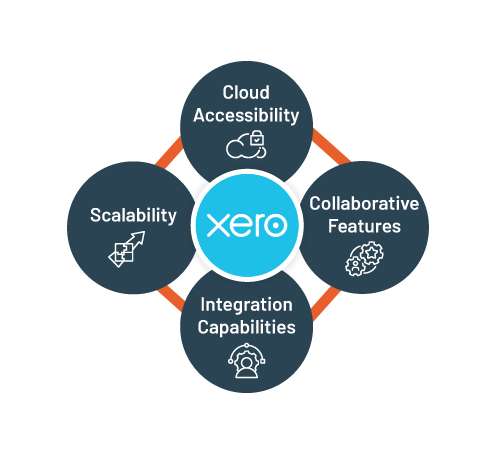
  1. Cloud Accessibility: Xero’s cloud-based approach allows you to access your financial data from anywhere with an internet connection, providing flexibility for businesses with remote teams or on-the-go requirements.
  2. Collaborative Features: With Xero, collaboration becomes effortless. Multiple users can work concurrently, sharing real-time insights and updates. This collaborative environment enhances communication and efficiency within your financial team.
  3. Integration Capabilities: Xero seamlessly integrates with a plethora of third-party apps, allowing you to create a customized business ecosystem. Whether it’s CRM, e-commerce, or project management, Xero’s compatibility ensures a holistic approach to business management.
  4. Scalability: Xero is suitable for businesses of all sizes, offering scalable plans that can grow with your company. This adaptability is particularly beneficial for startups and small businesses looking for a cost-effective solution.


Decoding MYOB: The All-Inclusive Accounting Solution

MYOB (Mind Your Own Business) is a robust accounting software with a long-standing reputation for its comprehensive features. Here’s what makes MYOB a contender in the accounting software arena:MYOB Accounting Solution

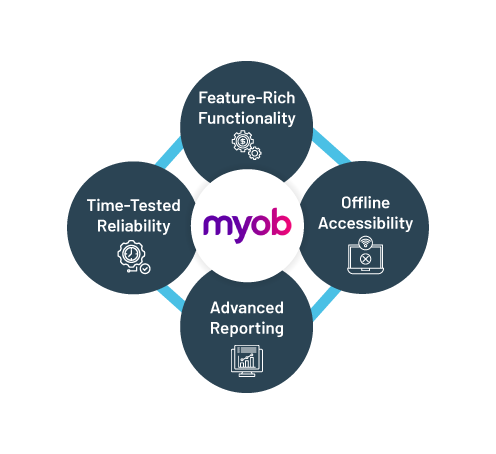
  1. Feature-Rich Functionality: MYOB offers a comprehensive suite of features, covering everything from basic bookkeeping to advanced financial management. This all-inclusive approach makes it suitable for businesses with diverse accounting needs.
  2. Offline Accessibility: Unlike Xero’s cloud-centric model, MYOB allows users to work offline, providing a level of accessibility even in environments with limited internet connectivity. This feature can be advantageous for businesses operating in remote areas.
  3. Advanced Reporting: MYOB’s reporting capabilities are robust, offering in-depth insights into various aspects of your financial operations. This advanced reporting functionality is beneficial for businesses requiring detailed analytics and forecasting.
  4. Time-Tested Reliability: MYOB has a long history in the accounting software realm, earning a reputation for reliability and stability. This legacy can be reassuring for businesses seeking a proven solution with a track record of performance.

Choosing the Right Fit: Key Considerations

  1. Business Size and Growth: Consider the current size of your business and its anticipated growth. Xero’s scalability makes it suitable for startups and small businesses, while MYOB’s comprehensive features cater to larger enterprises.
  2. Collaboration Needs: If real-time collaboration and cloud accessibility are critical for your business, Xero may be the preferred choice. However, if offline accessibility is a priority, MYOB might better align with your requirements.
  3. Feature Requirements: Evaluate the specific features your business needs. Xero is known for its intuitive interface and integrations, while MYOB excels in offering a wide array of features suitable for diverse accounting needs.
  4. Budget Considerations: Compare the pricing structures of Xero and MYOB to ensure that your chosen accounting software aligns with your budget constraints. Consider any additional costs for third-party app integrations or advanced features.

Conclusion: The Right Accounting Software for You

In the Xero vs. MYOB dilemma, the choice ultimately boils down to your unique business requirements. Both platforms offer strengths, and your decision should align with factors such as business size, collaboration needs, feature requirements, and budget constraints. Whether you opt for the cloud accessibility of Xero or the feature-rich functionality of MYOB, making an informed decision ensures that your chosen accounting software becomes a strategic asset in driving your business’s financial success.

FAQs

Q: What is Xero?

A: Xero is a cloud-based accounting software known for its user-friendly interface and real-time financial tracking capabilities.

Q: Why choose Xero?

A: Xero offers cloud accessibility, collaborative features, seamless integrations, and scalability, making it suitable for businesses of all sizes.

Q: What is MYOB?

A: MYOB (Mind Your Own Business) is a comprehensive accounting software with feature-rich functionality and a long-standing reputation for reliability.

Q: What sets MYOB apart?

A: MYOB stands out for its offline accessibility, advanced reporting capabilities, and proven track record of reliability, catering to businesses with diverse accounting needs.

Q: How to decide between Xero and MYOB?

A: Consider factors such as business size, collaboration needs, specific feature requirements, and budget constraints to choose the accounting software that aligns with your unique business needs.

Q: Is Xero suitable for startups?

A: Yes, Xero’s scalability makes it a suitable choice for startups and small businesses looking for a cost-effective and adaptable accounting solution.

Features and Benefits of Using MYOB Accounting Software

In the dynamic landscape of business finance, the right accounting software can be a game-changer. Enter MYOB (Mind Your Own Business), a comprehensive solution designed to streamline financial operations. In this blog, we delve into the key features and benefits that make MYOB a powerful ally in the realm of accounting.

Key Features of MYOB Accounting Software

  1. Comprehensive Functionality: MYOB offers a rich suite of features covering various aspects of financial management, from basic bookkeeping to advanced reporting. This comprehensive functionality ensures that businesses can meet diverse accounting needs within a single platform.
  2. Offline Accessibility: A standout feature of MYOB is its ability to operate offline. This means users can continue working even in environments with limited or no internet connectivity, providing a level of accessibility that suits businesses operating in diverse settings.
  3. Advanced Reporting Capabilities: MYOB excels in providing detailed insights into financial operations. Its advanced reporting capabilities empower businesses to generate in-depth analytics, forecasts, and financial statements, supporting strategic decision-making.
  4. Time-Tested Reliability: With a history spanning several years, MYOB has earned a reputation for reliability and stability. This time-tested track record provides businesses with confidence in the software performance and dependability.
  5. User-Friendly Interface: Despite its advanced capabilities, MYOB maintains a user-friendly interface. This makes it accessible to users with varying levels of accounting expertise, facilitating smooth onboarding and daily operations.
  6. Ease of Integration: MYOB is designed to seamlessly integrate with other business applications, creating a cohesive ecosystem. Whether it is connecting to e-commerce platforms, customer relationship management (CRM) systems, or payroll services, MYOB ensures a streamlined and integrated business environment.

Benefits of Using MYOB Accounting Software

  1. Enhanced Efficiency: The comprehensive features of MYOB contribute to enhanced efficiency in financial management. Users can perform a wide range of tasks within the software, reducing the need for manual processes and minimizing errors.
  2. Flexibility for Diverse Business Sizes: MYOB caters to businesses of varying sizes. Whether you are a small startup or a large enterprise, MYOB scalability allows you to adapt the software to your specific business requirements.
  3. Cost-Effective Solution: MYOB offers cost-effective solutions for businesses seeking advanced accounting capabilities. The software pricing structures ensure that businesses can access the features they need without unnecessary financial strain.
  4. Reliable Support and Updates: MYOB provides reliable customer support and regular software updates. This commitment to ongoing improvement and assistance ensures that businesses using MYOB stay current with the latest features and receive timely support when needed.
  5. Offline Operation for Remote Environments: The offline accessibility of MYOB is a crucial benefit for businesses operating in remote or less-connected environments. It ensures that financial tasks can continue without interruption, supporting business continuity.
  6. Compliance Assurance: MYOB helps businesses stay compliant with regulatory requirements. It supports adherence to accounting standards and assists in navigating the complex landscape of changing regulations, providing peace of mind for businesses in various industries.

Conclusion: Empowering Financial Management with MYOB

In the realm of accounting software, MYOB stands as a robust and versatile solution. Its combination of comprehensive features, reliability, and user-friendly design makes it a valuable asset for businesses seeking to streamline financial operations, enhance efficiency, and make informed strategic decisions. Whether you are a small startup or a large enterprise, MYOB features and benefits contribute to a more effective and reliable financial management experience.

FAQs

Q1: What is MYOB Accounting Software?

A: MYOB (Mind Your Own Business) Accounting Software is a comprehensive financial management solution designed to streamline various accounting tasks, from basic bookkeeping to advanced reporting.

Q2: How does MYOB stand out in terms of functionality?

A: MYOB offers a rich suite of features covering diverse financial needs, making it a one-stop solution for businesses. From offline accessibility to advanced reporting, MYOB ensures comprehensive functionality.

Q3: Is MYOB suitable for businesses of all sizes?

A: Yes, MYOB is scalable and caters to businesses of varying sizes, offering flexibility to adapt to the specific requirements of startups, small businesses, and larger enterprises.

Q4: What is the offline accessibility feature in MYOB?

A: MYOB operates offline, allowing users to work in environments with limited internet connectivity. This feature is advantageous for businesses operating in remote or less-connected areas.

Q5: How user-friendly is MYOB for businesses with varying expertise levels?

A: Despite its advanced capabilities, MYOB maintains a user-friendly interface. This design ensures accessibility for users with different levels of accounting expertise, facilitating smooth onboarding.