Archive for the ‘Accounting & Bookkeeping’ Category

How to Register or Sign In to CRA My Account (Step-by-Step Guide)

If you want full control over your tax information, CRA My Account is the place to start. It is the official online portal that lets you manage everything from returns to benefits in one place.

To access it, you need to register for a CRA account and understand how the CRA login process works. This guide walks you through how to register for a CRA account, how to complete your CRA registration for My Account, and how to log in without errors.

What Is CRA My Account?

CRA My Account is a secure online platform provided by the Canada Revenue Agency. It gives individuals direct access to their tax and benefit information.

Once you register for a CRA account, you no longer need to rely on paper notices or long wait times on support calls. Everything is available online, in real time.

Here is what you can do after you complete your CRA My Account setup:

  • View tax returns and notices of assessment
  • Track refund status and payment history
  • Update personal details and direct deposit information
  • Monitor benefit payments like GST/HST credits

What this really means is simple. When you use CRA My Account, you stay in control of your financial data without delays or guesswork.

What Information Do You Need Before You Register for CRA My Account?

Before you begin to register for a CRA account, you need to have specific information ready. The system requires exact details, and any mismatch can stop your progress.

You will need:

  • Your Social Insurance Number (SIN)
  • Your date of birth
  • Details from a recently filed tax return
  • A valid email address and phone number

The tax return details are critical. They act as a verification checkpoint during the CRA registration for My Account.

Here is where many people get stuck. If you have not filed a recent tax return, you will not be able to complete the CRA account registration process. Filing your taxes is a prerequisite.

Taking a few minutes to gather these details will save you from restarting the process midway.

Also Read:  What Is the T2 Tax Form?

How to Register for CRA My Account: Step-by-Step Guide

Let us break down how to register for a CRA account into clear steps so you can complete it without confusion.

Step 1: Access the Official CRA Sign-In Page

Start by searching for Canada Revenue Agency login and open the official CRA website. From there, select the option to register.

Always make sure you are on the official site. Avoid third-party links to protect your data.

Step 2: Select Your Preferred Sign-In Method

During the CRA My Account registration process, you will choose how you want to log in going forward.

You will see three main options:

  • Sign-In Partner using your bank credentials
  • CRA user ID and password
  • Provincial digital ID (available in select regions)

All three options lead to the same CRA My Account dashboard. The difference lies only in how you authenticate your identity.

Step 3: Enter Personal and Tax Information Accurately

You will now enter your SIN, date of birth, and tax return details.

Accuracy matters here. Even a small mismatch can block your attempt to register for a CRA account. Use your latest tax return as a reference and double-check each entry before moving forward.

Step 4: Create Your Login Credentials

If you choose CRA credentials, you will need to:

  • Create a unique username
  • Set a strong password
  • Choose and answer security questions

These credentials will be used for every future CRA login, so choose something secure but memorable.

Step 5: Set Up Multi-Factor Authentication for Security

The CRA requires multi-factor authentication for all users. This step protects your account from unauthorized access.

You can choose:

  • Phone-based verification
  • Authenticator apps
  • Grid-based security codes

Every time you complete a CRA login, you will need to pass this additional verification step.

Step 6: Complete Identity Verification to Unlock Full Access

At this stage, your account is created, but access may still be limited.

You can verify your identity in two ways:

  • Instant verification using government-issued ID
  • Waiting for a security code sent by mail

The mailed code can take several days to arrive. Once entered, your CRA My Account will be fully activated.

Step 7: Confirm Registration and Access Your Dashboard

Once verification is complete, your registration process is finished.

You can now log in anytime and access your full account features without restrictions.

Need Help with CRA My Account Setup?

Avoid registration errors and delays. Let Global FPO guide you through a smooth and secure CRA account setup.

Get Free Consultation

How Do You Complete CRA Login Without Errors?

Once your account is active, the CRA login process becomes straightforward.

Here is how to sign in correctly:

  1. Go to the official CRA login page
  2. Select your sign-in method
  3. Enter your credentials or banking details
  4. Complete multi-factor authenticationx

After these steps, you will land on your CRA My Account login dashboard.

Most login issues happen because of incorrect credentials or failed authentication steps. Staying consistent with your chosen login method helps avoid confusion.

What Common Challenges Can Occur During CRA My Account Registration?

Even when you follow the steps, issues can still come up. Knowing what to expect helps you avoid delays.

  1. Incorrect Tax Information Stops Registration
    The system checks your tax details against official records. If the numbers do not match exactly, your attempt to register for a CRA account will fail. Always refer to your filed return instead of guessing.
  2. Not Filing Taxes Prevents Account Creation
    You cannot register for a CRA account without a recent tax filing. This is one of the most common roadblocks. If needed, file your return first and then restart the process.
  3. Delays in Receiving the Security Code
    Mail verification can take time. A missing code can be replaced by requesting a new one or switching to instant verification when available.
  4. Forgotten Credentials Affect CRA Login
    Login issues are usually resolved through the password recovery option. In cases of complete access loss, re-registration or contacting CRA support becomes necessary.

Which CRA Login Method Should You Choose?

During the CRA My Account registration process, choosing the right login method can make your experience smoother.

Here is how to decide:

Login Option When It Works Best
Sign-In Partner When you prefer quick access using banking credentials
CRA User ID When you want full control over login details
Provincial ID When you already use a government digital identity

All options give access to the same CRA My Account. Your choice depends on convenience and comfort with security methods.

Why Is It Important to Set Up Your CRA My Account Early?

You should register for a CRA account before you actually need it. Waiting until tax deadlines creates unnecessary pressure and delays.

Once you complete the CRA account registration process, every CRA login becomes quick and consistent. You get direct access to refunds, notices, and updates without relying on manual follow-ups.

If you want to avoid setup errors or delays, support from a firm like Global FPO can help streamline the process.

Setting up your CRA My Account early ensures you are ready when it matters and gives you full control through the official Canada Revenue Agency login page.

Need Help with CRA Setup?

Get expert assistance for smooth registration and login without errors.

FAQs

Que: 1. How do I register for CRA account for the first time?

Ans. To register for a CRA account, visit the official site, enter your SIN, tax details, and set up login credentials. You will also need to complete identity verification to access full features.

Que: 2. What details are required to register for a CRA account?

Ans. You need your SIN, date of birth, and information from a recently filed tax return. These details are used to verify your identity during registration.

Que: 3. Can I complete CRA My Account registration without filing taxes?

Ans. No, you cannot complete CRA My Account registration without a recent tax filing. The system uses your tax return for verification.

Que: 4. What is the fastest way to complete CRA login?

Ans. The fastest way to complete CRA login is by using a Sign-In Partner, such as your bank credentials, along with multi-factor authentication.

Que: 5. Why is my CRA login not working?

Ans. Your CRA login may fail due to incorrect credentials, failed multi-factor authentication, or account lock issues. Resetting your password usually resolves the problem.

Que: 6. How long does it take to activate CRA My Account?

Ans. If you use instant verification, CRA My Account can be activated immediately. Mail verification may take up to 10 days.

Que: 7. What should I do if I do not receive my CRA security code?

Ans. If your code does not arrive, request a new one or switch to instant verification if available to complete access setup for your account.

Que: 8. Can I access CRA My Account from outside Canada?

Ans. Yes, you can access CRA My Account from outside Canada, but you must complete the same CRA login steps, including multi-factor authentication.

Que: 9. Can Global FPO help with CRA account registration?

Ans. Yes, Global FPO can assist with the process of CRA registration for My Account by ensuring your details are accurate and guiding you through each step. This helps reduce errors and speeds up account activation.

Que: 10. When should you consider using Global FPO for CRA setup?

Ans. You can consider Global FPO if you face issues with CRA login, verification delays, or incorrect tax details. Professional support can make the registration process smoother and more reliable.

What is Return on Equity: Definition, Formula & Examples

If you want to understand how efficiently a business uses investor money, return on equity (ROE) is one of the most practical metrics to focus on. It shows how much profit a company generates from the capital shareholders have invested.

Unlike revenue or growth numbers, ROE goes deeper. It tells you whether the business is actually creating value from the money it already has.

If you are evaluating a company, managing finances, or making investment decisions, understanding return on equity gives you a clear edge.

What Is Return on Equity?

Return on equity measures how effectively a company uses shareholder funds to generate profit. It answers a direct question: how much return are you getting on the money invested in the business?

For example, if your ROE (return on equity) is 18%, it means the business generates $0.18 in profit for every $1 of equity.

This metric matters because it connects profitability with ownership capital.

Here’s what it helps you understand:

  • How efficiently your business uses invested capital
  • Whether management decisions are driving real returns
  • How your performance compares to competitors

A consistently strong ROE usually signals a well-managed and financially efficient business. But a single number is not enough. Trends and context matter just as much.

What is The Return on Equity Formula?

To understand the metric properly, you need to know the return on equity formula. This formula connects profit with the capital invested by shareholders.

Once you understand what goes into it, interpreting the results becomes much easier.

ROE =

Net Income
Shareholders’ Equity

This is the standard formula to calculate return on equity.

How to Calculate Return on Equity Step by Step?

If you are trying to understand how to calculate return on equity, the process is simple once you know where to look. You just need two numbers from your financial statements. The key is accuracy. Even small errors in inputs can lead to misleading results.

Follow these steps to calculate it correctly:

Step 1: Identify net income

Find this in your income statement. It is your final profit after all expenses.

Step 2: Calculate shareholders’ equity

Use your balance sheet. Subtract total liabilities from total assets.

Step 3: Apply the formula

Use the formula to calculate return on equity:

ROE = Net Income ÷ Shareholders’ Equity

Step 4: Convert into percentage

Multiply the result by 100.

Example calculation

Net Income = $800,000
Shareholders’ Equity = $4,000,000

ROE = 800,000 ÷ 4,000,000 = 0.20 → 20%

This means the company generates $0.20 in profit for every $1 of equity.

Understanding how to calculate return on equity helps you quickly evaluate financial performance without relying on complex analysis.

How the ROE Formula Works in Practice with Example

Understanding theory is useful, but real clarity comes from examples. Looking at actual numbers helps you see how return on equity works in different scenarios.

Company A reports:

Net Income: $1,200,000
Shareholders’ Equity: $6,000,000

Using the return on equity formula:

ROE = 1,200,000 ÷ 6,000,000 = 0.20 → 20%

Now compare this with Company B:

Net Income: $1,000,000
Shareholders’ Equity: $8,000,000

ROE = 1,000,000 ÷ 8,000,000 = 0.125 → 12.5%

Even though Company B earns a high absolute profit, Company A is more efficient at generating returns from its equity.

This is why ROE return on equity is more insightful than looking at profit alone.

What Is a Good Return on Equity Ratio for Different Businesses?

There is no single number that defines a “good” ROE. It depends heavily on the type of business and industry conditions. However, general benchmarks can help you evaluate performance more clearly.

Here are some commonly accepted ranges:

  • 15% to 20% is typically considered strong
  • 10% to 15% is moderate
  • Below 10% may indicate inefficiency

However, industry context matters.

  • Tech companies often show higher return on equity
  • Manufacturing businesses may have moderate levels
  • Capital-heavy industries may show lower ratios

A consistently improving ROE is often more valuable than a single high number.

If your return on equity is rising over time, it indicates better capital utilization and smarter financial decisions.

What Affects Return on Equity and How to Improve It?

Return on equity does not change randomly. It is driven by specific financial and operational factors within your business. Understanding these factors helps you take control of your performance instead of just measuring it.

Several key elements influence ROE:

1. Profit margins

When your profit margins improve, net income increases. This directly strengthens your overall returns without requiring additional capital.

2. Asset efficiency

The better you use your assets, the more output you generate from the same investment. This improves financial performance without increasing costs.

3. Financial leverage

Using debt can amplify returns, but it also increases risk. The key is maintaining a balance that supports growth without creating financial pressure.

4. Cost control

Reducing unnecessary expenses improves profitability. Even small cost optimizations can have a noticeable impact on overall returns.

Improving performance requires a structured approach. You need to focus on both profitability and efficiency at the same time.

Limitations of Return on Equity You Should Not Ignore

While ROE is useful, it has limitations you should be aware of. Relying on it blindly can lead to incorrect conclusions. Understanding these drawbacks helps you use the metric more effectively.

It can be influenced by debt
High borrowing reduces shareholder equity, which can artificially inflate return on equity and make performance look stronger than it actually is.

It does not reflect cash flow
A company may report strong ROE but still struggle with liquidity, meaning it lacks actual cash to support operations or growth.

One-time gains can distort results
Temporary or non-recurring profits can boost ROE return on equity, giving a false impression of sustainable performance.

It varies across industries
Different industries have different capital structures, so comparing ROE across sectors often leads to inaccurate conclusions.

This is why return on equity should always be analyzed alongside other financial metrics for a complete picture.

Return on Equity vs ROA vs ROI: What Is the Difference?

To fully understand return on equity, it helps to compare it with other financial metrics. Each one measures performance from a different angle.

Metric Full Form Focus Best Used For
ROE Return on Equity Profit generated from shareholder equity Evaluating investor returns and capital efficiency
ROA Return on Assets Profit generated from total assets Measuring how efficiently assets are used
ROI Return on Investment Return generated on overall investment Assessing profitability of investments and projects

Return on equity focuses only on equity capital, making it more relevant for investors and business owners.

Other metrics provide broader insights, but ROE remains one of the most direct measures of profitability.

Should You Rely Only on Return on Equity for Financial and Investment Decisions?

Short answer: no. It is tempting to rely heavily on ROE because it is simple and powerful. However, no single metric can give you the full picture. Financial decisions require multiple perspectives.

Here is a better way to approach it:

  • Use ROE to measure profitability
  • Combine it with cash flow and debt metrics
  • Track performance over multiple periods

What this really means: return on equity is most powerful when used as part of a bigger financial picture.

How to Use Return on Equity For Financial Performance Evaluation

If you want to evaluate financial performance with clarity, return on equity is one of the most reliable metrics available. It directly connects profit with invested capital and shows whether your business is actually creating value.

But the real insight comes from consistency and context. Tracking your ROE over time and comparing it within your industry gives you a much clearer picture than a single number ever could.

At the same time, accurate financial data is what makes this metric useful in the first place. If your numbers are not clean or up to date, even the best analysis can lead to wrong decisions.

That is where having structured financial processes and the right support system matters. Many firms work with partners like Global FPO to maintain accurate reporting and gain better visibility into metrics like return on equity without adding internal complexity.

FAQs

Que: 1. What is return on equity in simple terms?

Ans. Return on equity measures how much profit a company generates from shareholder investments. It shows whether the business uses its capital efficiently to generate consistent returns.

Que:2 . What is the return on equity formula?

Ans. The return on equity formula divides net income by shareholders’ equity. It connects profitability with invested capital and helps evaluate how efficiently a business generates returns.

Que: 3. How to calculate return on equity quickly?

Ans. To calculate return on equity, divide net income by shareholders’ equity and multiply by 100. This gives a percentage that reflects how efficiently capital is used.

Que: 4. What is a good ROE for a business?

Ans. A good ROE usually falls between 15% and 20%, depending on industry standards. You should compare it with similar businesses and track performance consistently over time.

Que: 5. Why is ROE important for investors?

Ans. Return on equity helps investors understand how efficiently a company uses invested funds. It offers a clear measure of profitability and supports better investment decisions.

Que: 6. Can return on equity be negative?

Ans. Yes, return on equity can be negative when a company reports losses or has negative equity. This usually indicates weak financial performance or inefficient capital usage.

Que: 7. How can a business improve its ROE?

Ans. A business can improve ROE by increasing profitability, reducing costs, and improving efficiency. Better asset utilization and financial management also contribute to stronger returns.

Que: 8. What are the limitations of ROE?

Ans. ROE can be misleading because it is affected by debt and one-time gains. It also ignores cash flow, so it should be used with other financial metrics.

Que: 9. How can Global FPO help improve return on equity?

Ans. Global FPO helps improve financial accuracy and reduce costs. This enables better tracking of return on equity and supports more informed and consistent financial decision-making.

Que: 10. Why should CPA firms track return on equity with Global FPO?

Ans. CPA firms can use Global FPO to improve reporting accuracy and insights. This makes tracking ROE more reliable and helps support better financial planning and analysis.

Bookkeeping vs Accounting: What’s the Real Difference?

If you have ever compared bookkeeping vs accounting, you are not alone. These terms are often used interchangeably, but they serve very different roles in your financial system.

Both are essential, but they operate at different levels. One focuses on recording financial activity. The other turns that data into insight.

Understanding the bookkeeping vs accounting difference is not just about definitions. It shapes how you manage cash flow, ensure compliance, and plan growth.

Let us break it down in a way that actually makes sense.

What Is Bookkeeping?

Bookkeeping is the process of recording and organizing financial transactions. It is the first layer of your financial system.

It answers a simple question: what happened?

Every sale, expense, payment, or invoice gets recorded. This ensures your financial data stays complete and up to a date.

A bookkeeper typically handles:

  • Recording daily transactions
  • Managing invoices and billing
  • Tracking accounts payable and receivable
  • Reconciling bank and credit card statements
  • Maintaining general ledgers
  • Processing payroll entries

This work requires consistency and attention to detail. Even small errors can affect your financial records later.

Top US financial resources consistently describe bookkeeping as the foundation of all financial reporting. Without it, nothing else works reliably.

Think of bookkeeping as your financial record-keeper. It captures everything, but it does not interpret anything.

Need expert help managing your bookkeeping and accounting?

Hire a Bookkeeper Near You →

What Is Accounting?

Accounting builds on bookkeeping. It takes the recorded data and turns it into meaningful financial insight.

If bookkeeping answers what happened, accounting answers what it means.

An accountant typically handles:

  • Preparing financial statements
  • Analyzing revenue, costs, and profitability
  • Tax planning and compliance
  • Budgeting and forecasting
  • Financial advisory and strategy

Accounting is more analytical. It requires understanding trends, identifying risks, and supporting decision-making.

Leading US-based resources like the IRS Small Business Guide highlight that accounting helps businesses evaluate performance and plan future actions using financial data.

This is where your numbers start influencing decisions.

Bookkeeping vs Accounting: Key Differences Explained

The confusion around accounting vs bookkeeping comes from overlap. Both deal with financial data, but their roles are clearly distinct.

Here is a direct comparison to clarify the bookkeeping vs accounting difference:

Area Bookkeeping Accounting
Core Function Accurate recording of financial transactions Interpreting and analyzing financial data
Nature of Work Process-driven and detail-oriented tasks Strategic, analytical, and advisory-focused
Frequency Daily or ongoing operations Monthly, quarterly, and yearly reporting
Output Organized financial records and ledgers Financial reports, insights, and forecasts
Objective Ensure accuracy and compliance Support decision-making and business growth

Another way to simplify it:

  • Bookkeeping is about data entry
  • Accounting is about data analysis

Bookkeeping creates the numbers. Accounting explains them.

This distinction is consistent across most top-ranking US blogs and financial platforms.

How Bookkeeping and Accounting Work Together

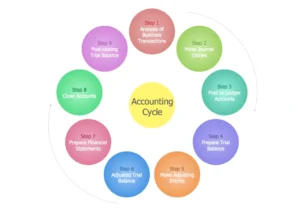
Accounting Cycle Process

Accounting Cycle Process

Treating bookkeeping vs accounting as a choice is a mistake. They are designed to work together.

Here is how the relationship plays out:

  • Bookkeeping records every financial transaction
  • Accounting reviews and analyzes those records
  • Insights from accounting guide business decisions

If bookkeeping is weak:

  • Your financial data becomes unreliable
  • Reports lose accuracy
  • Compliance risks increase

If accounting is missing:

  • You lack clarity on performance
  • Financial decisions become guesswork
  • Growth planning becomes difficult

This is why businesses are moving toward integrated bookkeeping and accounting services instead of handling them separately.

When both functions align, you get accuracy plus insight. That combination drives better financial outcomes.

When Do You Need Bookkeeping vs Accounting?

The timing depends on your business stage and complexity.

You need bookkeeping when:

  • You are tracking daily financial transactions
  • You want organized and updated financial records
  • You need visibility into cash flow

You need accounting when:

  • You want to understand profitability
  • You are planning budgets or forecasts
  • You need tax planning and compliance support
  • You are making strategic financial decisions

Most businesses start with bookkeeping. As operations grow, accounting becomes essential.

The smarter approach is not choosing between bookkeeping vs accounting, but scaling both as your needs evolve.

Also Read: How Much Does a Bookkeeper Cost

Why the Difference Matters for Your Business

Understanding the bookkeeping vs accounting difference has practical impact.

It affects:

  • Accuracy of financial records
  • Quality of financial decisions
  • Compliance with tax regulations
  • Ability to plan and scale

Poor bookkeeping leads to flawed data. Flawed data leads to poor decisions.

On the other hand, strong accounting without proper bookkeeping is built on unreliable inputs.

This is why more CPA firms and businesses rely on combined bookkeeping and accounting services to maintain consistency across both functions.

How Outsourcing Helps CPA Firms Manage Both Functions

For CPA firms, managing both bookkeeping and accounting internally can stretch resources. Routine tasks take up time that could be spent on higher-value advisory work.

Outsourcing changes that balance.

With the right partner, you can:

  • Offload repetitive bookkeeping tasks
  • Ensure accurate and timely financial records
  • Focus internal teams on advisory and client relationships
  • Scale operations without increasing overhead

This is where Global FPO adds value. By supporting CPA firms with structured bookkeeping and accounting services, it helps streamline workflows while maintaining accuracy and compliance.

Instead of choosing between efficiency and quality, firms get both.

Focus on Integration, Not Comparison

The discussion around bookkeeping vs accounting often frames them as separate functions.

In reality, they are parts of the same system.

Bookkeeping ensures your financial data is accurate and complete. Accounting ensures that data is useful and actionable.

You do not need one instead of the other. You need both working together.

For CPA firms looking to improve efficiency and deliver better client outcomes, integrated bookkeeping and accounting services are no longer optional.

They are the foundation of a strong financial operation, and a smarter way to scale.

Ready to Simplify Your Financial Management?

Let Global FPO handle your bookkeeping and accounting while you focus on growth.

Talk to Our Experts

FAQs

Que: 1. What is the key difference between bookkeeping and accounting?

Ans: Bookkeeping focuses on recording daily financial transactions, while accounting interprets that data to provide insights, reports, and strategic financial guidance.

Que: 2. Why do businesses need both bookkeeping and accounting?

Ans: Both are essential because bookkeeping ensures accurate financial records, while accounting uses that data to guide decisions, planning, and long-term business growth.

Que: 3. Can bookkeeping exist without accounting?

Ans: Yes, bookkeeping can exist alone, but without accounting, businesses lack analysis, insights, and the ability to make informed financial decisions.

Que: 4. Is accounting more important than bookkeeping?

Ans: No, both are equally important. Bookkeeping builds the foundation, and accounting uses that foundation to deliver insights and strategic direction.

Que 5. When should a business invest in accounting services?

Ans: A business should invest when it needs financial analysis, tax planning, forecasting, and strategic insights to support growth and decision-making.

Que 6. What are bookkeeping and accounting services?

Ans: These services include transaction recording, reconciliations, financial reporting, tax preparation, analysis, and advisory support to maintain accurate and useful financial data.

Que 7. How does outsourcing help with bookkeeping and accounting?

Ans: Outsourcing improves accuracy, reduces operational workload, ensures compliance, and allows businesses to focus more on core activities and growth.

Que 8. Do CPA firms benefit from outsourcing these functions?

Ans: Yes, outsourcing helps CPA firms scale operations, reduce costs, and focus more on high-value advisory services and client relationships.

Que 9. Does Global FPO provide bookkeeping support?

Ans: Yes, Global FPO offers flexible and scalable bookkeeping solutions designed to handle daily financial tasks efficiently for CPA firms and businesses.

Que 10. Can Global FPO manage both bookkeeping and accounting services?

Ans: Yes, Global FPO provides end-to-end support, covering bookkeeping, accounting, reporting, and compliance to ensure accuracy and support business growth.

What Is Liabilities in Accounting? A Simple Guide for Businesses

Article Summary:

  • Liabilities in accounting are financial obligations a business owes, including loans, expenses, and taxes.
  • They are recorded on the balance sheet and form a key part of the accounting equation: assets = liabilities + equity.
  • Liabilities are classified into current (short-term) and non-current (long-term) based on payment timelines.
  • Common examples include accounts payable, loans, accrued expenses, and tax obligations.
  • Proper liability management improves cash flow, reduces financial risk, and supports business growth.
  • Tracking, planning, and optimizing liabilities helps businesses make better financial and strategic decisions.

Understanding what is liabilities in accounting is fundamental if you want real control over your business finances. Every business operates using a mix of owned resources and borrowed obligations. Those obligations are your liabilities.

At its simplest, liabilities in accounting refers to financial debts or obligations a business owes to external parties. These obligations result in future outflows of resources like cash, goods, or services.

The liabilities meaning is straightforward. It represents what your business owes, whether it is to suppliers, lenders, employees, or government authorities.

Liabilities are recorded on the balance sheet and form a core part of liability financial accounting, helping you understand how your business is funded and how much it owes at any point in time.

What Is Liabilities in Accounting and How Does It Work?

To go deeper into what is liabilities in accounting, you need to see how it fits into the broader financial structure of a business. Every transaction you record impacts at least two accounts. When your business receives value today but pays later, a liability is created.

For example, if you purchase inventory on credit, you receive goods immediately but pay later. That unpaid amount becomes a liability. Liabilities are a key part of the accounting equation:

The fundamental accounting equation is:

Assets = Liabilities + Equity

This equation explains how your business is financed. Assets represent what you own. Liabilities represent what you owe. Equity represents the owner’s share.

This relationship is the foundation of liability financial accounting and is used in every financial statement you prepare. Without liabilities, most businesses would struggle to operate or grow. Credit, loans, and deferred payments are essential tools for scaling operations.

Also Read: How to Prepare Financial Statements

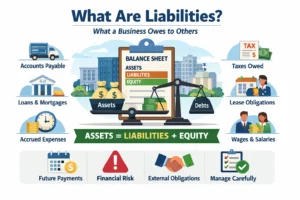
Examples of Liabilities in Accounting

Examples of Liabilities in Accounting

Why Liabilities Matter More Than You Think

Many businesses underestimate the importance of liabilities in accounting. They focus heavily on revenue and profit but ignore how obligations impact sustainability.

Here is the reality. Profit does not guarantee liquidity. You may be profitable on paper but still struggle to pay salaries or vendors if liabilities are not managed properly.

Tracking liabilities helps you:

  • Plan future cash outflows
  • Avoid late payment penalties
  • Maintain vendor relationships
  • Assess financial risk accurately
  • Make better borrowing decisions

Liabilities also reveal how dependent your business is on external funding. A high level of debt increases risk but can also support growth if managed wisely.

Understanding the liabilities meaning in this context helps you move beyond basic bookkeeping into strategic financial management.

What Are the Types of Liabilities in Accounting?

To fully understand types of liabilities in accounting, you need to categorize them correctly. This classification helps you prioritize payments and plan finances effectively. Liabilities are broadly divided into current and non-current categories.

Current Liabilities (Short-Term Obligations)

Current liabilities are obligations due within one year. These directly impact your working capital and day-to-day operations.

Common examples of liabilities in accounting under this category include:

These liabilities require constant monitoring because they affect your ability to operate smoothly. If current liabilities exceed current assets, it may signal liquidity issues.

Non-Current Liabilities (Long-Term Obligations)

long-term investments or expansion. Non-current liabilities are debts due beyond one year. These are typically used to finance

Common examples include:

  • Long-term bank loans
  • Mortgage obligations
  • Lease liabilities
  • Deferred tax liabilities

These liabilities are less urgent but still critical. Poor management can lead to long-term financial strain. Understanding the types of liabilities in accounting helps you balance short-term survival with long-term growth.

Common Examples of Liabilities in Accounting

Looking at practical examples of liabilities in accounting makes the concept easier to apply in real scenarios.

Here are the most common liabilities businesses deal with:

Accounts Payable

This is money owed to suppliers for goods or services already received. It is one of the most frequent entries in liabilities in accounting.

Loans Payable

These include business loans from banks or financial institutions. They involve both principal and interest payments.

Accrued Expenses

These are expenses incurred but not yet invoiced. Salaries, utilities, and interest often fall into this category.

Taxes Payable

This includes sales tax, payroll tax, and income tax obligations that must be paid to government authorities.

Lease Obligations

If your business rents equipment or property, the future payments are recorded as liabilities.

Each of these reflects a commitment your business must fulfill. Ignoring them can damage credibility and disrupt operations.

How Liabilities Impact Financial Statements

Liabilities play a critical role across all major financial statements.

On the balance sheet, liabilities in accounting are listed alongside assets and equity. They show what your business owes at a specific point in time.

On the income statement, liabilities indirectly impact profitability through expenses like interest payments.

On the cash flow statement, they influence cash outflows. Paying off liabilities reduces cash available for operations or investment.

This interconnected role makes liability financial accounting essential for accurate reporting and decision-making.

If liabilities are recorded incorrectly, your entire financial picture becomes unreliable.

Also Read : Balance Sheet vs Income Statement

How Liabilities Affect Cash Flow and Risk

One of the most important aspects of liabilities meaning is how it affects cash flow. Every liability represents a future payment. If too many payments are due at the same time, your business may face liquidity pressure.

Here is how liabilities influence risk:

  • High short-term liabilities increase immediate cash pressure
  • Excessive long-term debt raises financial risk
  • Missed payments affect credit ratings
  • Poor tracking leads to unexpected obligations

However, liabilities are not always negative.

Used strategically, they allow businesses to:

  • Invest in growth without upfront capital
  • Manage operational expenses efficiently
  • Expand without diluting ownership

The key is balance. Understanding what is liabilities in accounting helps you use debt as a tool rather than a burden.

Manage Your Business Liabilities with Expert Support

How to Manage Liabilities Effectively

Managing liabilities requires more than recording them. It involves actively controlling and optimizing your obligations.

Here are practical ways to improve liability management:

Track Everything in One Place

Fragmented data leads to missed payments. Centralizing your liabilities ensures visibility.

Prioritize Based on Due Dates

Short-term obligations should always be addressed first to avoid penalties.

Monitor Cash Flow Regularly

Align your payments with expected inflows to maintain stability.

Avoid Over-Reliance on Debt

Too much borrowing increases financial risk and reduces flexibility.

Review Liability Trends

Regular analysis helps you identify patterns and improve decision-making.

Effective management of liabilities in accounting ensures your business remains solvent and financially stable. It also strengthens your reputation with lenders, vendors, and investors.

Manage Your Liabilities with Expert Support

The Role of Liabilities in Business Growth

It may seem counterintuitive, but liabilities can actually support growth. When used correctly, they provide access to capital without requiring immediate cash outflows.

For example:

  • Loans help fund expansion
  • Credit terms improve working capital
  • Lease agreements reduce upfront costs

Understanding the types of liabilities in accounting allows you to choose the right financing options for your business.

However, growth funded by liabilities must be managed carefully. Poor planning can lead to excessive debt and financial stress. The goal is to use liabilities as a strategic resource, not a fallback.

Turn Liabilities Into Financial Clarity

Understanding what is liabilities in accounting is not just about definitions. It is about gaining control over your financial future.

Liabilities tell you:

  • What your business owes
  • When payments are due
  • How financially stable you are
  • How much risk you carry

When managed well, liabilities in accounting become a tool for growth, planning, and smarter decision-making.

When ignored, they can quietly disrupt your operations and cash flow. The difference lies in how clearly you track and manage them.

Get End-to-End Accounting Support for Your Business

FAQs

Que: 1. What is liabilities in accounting in simple terms?

Ans. Liabilities in accounting refers to the money or obligations a business owes to others, such as loans, unpaid bills, or taxes.

Que: 2. What are common examples of liabilities in accounting?

Ans. Common examples of liabilities in accounting include accounts payable, loans, accrued expenses, and taxes payable.

Que: 3. What types of liabilities in accounting should businesses track?

Ans. The main types of liabilities in accounting are current (short-term) and non-current (long-term) liabilities.

Que: 4. How does Global FPO help manage liabilities in accounting?

Ans. Global FPO helps businesses track, classify, and manage liabilities in accounting with structured processes and real-time visibility.

Que: 5. Can Global FPO improve accuracy in liability financial accounting?

Ans. Yes, Global FPO ensures accurate liability financial accounting through expert oversight and standardized reporting systems.

Que: 6. Does Global FPO help with both short-term and long-term liabilities?

Ans. Global FPO supports businesses in managing both current and non-current liabilities with clear tracking and timely reporting.

Que: 7. Why should businesses outsource liability tracking to Global FPO?

Ans. Outsourcing to Global FPO reduces manual errors, improves visibility, and ensures your liabilities are managed efficiently without operational stress.

How Much Does a Bookkeeper Cost for a Small Business?

Article Summary:

  • Bookkeeping costs vary by service model, complexity, and business size.
  • Small businesses typically spend $200 to $2,500 per month on bookkeeping.
  • Freelance, in-house, and outsourced models offer different cost structures.
  • Bookkeepers save time, improve accuracy, and reduce compliance risks.
  • Clean books support better decision-making and tax efficiency.
  • Choosing the right bookkeeper depends on needs, budget, and growth plans.

Running a small business means wearing many hats at once. You manage operations, oversee sales, handle customer relationships, and plan for growth. Somewhere in the middle of all this sits bookkeeping. It is rarely exciting, but it is essential. Without accurate books, even profitable businesses can struggle with cash flow, compliance, and decision-making.

At some point, almost every business owner asks the same question: how much does a bookkeeper cost for a small business, and is it really worth paying for one?

The short answer is yes. The longer answer depends on your business size, transaction volume, and how much financial clarity you want. In 2026, bookkeeping costs vary more than ever due to remote services, automation, and outsourced accounting models.

This guide breaks down bookkeeping costs in practical terms. It explains what you can expect to pay, what value a bookkeeper actually brings, common hiring challenges, and how to decide what type of bookkeeping support makes sense for your business

How Much Does a Bookkeeper Cost?

The cost of hiring a bookkeeper depends on how you engage them and how complex your finances are. There is no one-size-fits-all price. Instead, costs usually fall into a few predictable ranges.

Bookkeeping Model Typical Monthly Cost Best For
In-house bookkeeper $3,500 – $4,500 Businesses with high daily transaction volume
Freelance bookkeeper $500 – $2,000 Small teams and early-stage businesses
Outsourced bookkeeping firm $300 – $1,500 Most small businesses seeking predictable costs
Full-service accounting and bookkeeping $1,200 – $3,000 Growing businesses needing reporting and advisory

Hourly Bookkeeping Rates

Some businesses choose hourly support, especially in early stages.

Freelance bookkeepers typically charge between $20 and $50 per hour. Highly experienced professionals or industry specialists may charge more. This model works well if your transaction volume is low or if you need help only a few hours per month.

Hiring an in-house bookkeeper is a bigger commitment. Salaries generally range from $35,000 to $55,000 per year, depending on experience and location. Once you add benefits, payroll taxes, and software, the true cost is often higher.

Monthly Bookkeeping Packages

Many small businesses prefer predictable monthly pricing.

Basic bookkeeping services usually cost $200 to $400 per month. These plans often include transaction recording, expense categorization, and bank reconciliations.

More comprehensive bookkeeping services can range from $500 to $2,500 per month. These plans may include payroll support, financial reports, cash flow tracking, and coordination with tax professionals.

Additional Costs to Consider:

Bookkeeping software is often required. Tools like QuickBooks, Xero, or FreshBooks typically cost $20 to $150 per month, depending on features.

Some bookkeepers also offer consulting or financial advisory services. These may be billed separately but can add strategic value beyond basic recordkeeping.

Assess Your Current Bookkeeping Setup

Global FPO – Bookkeeping and Accounting Services

Common Challenges When Hiring a bookkeeper

Hiring a bookkeeper isn’t without its challenges. Here are some common issues small business owners face:

Finding the Right Fit

Not all bookkeepers are the same. Some specialize in specific industries, while others focus on general small business accounting. Finding someone who understands your business model, tax exposure, and growth stage can take time.

Trust is also critical. A bookkeeper has access to sensitive financial data, so reputation, references, and transparency matter as much as technical skill

Managing Costs Effectively

Small businesses often operate within tight budgets. Paying for bookkeeping can feel like a strain, especially when cash flow fluctuates.

Hidden fees can also be an issue. Some providers charge extra for cleanup work, reports, or support outside standard hours. Clear pricing and defined scope are essential.

Communication and Accessibility

Freelance bookkeepers may work with multiple clients, which can affect responsiveness. Miscommunication or delayed updates can lead to errors or missed deadlines.

Clear expectations around communication, reporting frequency, and turnaround time help prevent these issues.

Read Blog- Single Entry Vs Double Entry Bookkeeping

How Much Can a Bookkeeper Save Your Small Business?

While bookkeeping has a cost, the savings often outweigh the expense.

Time Savings

Bookkeepers handle day-to-day financial tasks so business owners can focus on growth. The time saved often translates into higher revenue-generating activity.

Professionals Bookkeepers also complete tasks faster and more accurately, reducing time spent fixing errors later

Financial Accuracy

Accurate books reduce costly mistakes. Errors in categorization, reconciliation, or reporting can lead to incorrect tax filings or missed deductions.

Timely accounts payable and receivable management also improves cash flow and avoids late fees.

Strategic Financial Management

Bookkeepers help maintain clean data, which enables better budgeting and forecasting. With accurate financial information, businesses can plan ahead instead of reacting to problems.

Well-maintained records also support tax efficiency by identifying deductions and credits that may otherwise be missed.

Compliance and Risk Reduction

Proper bookkeeping supports compliance with federal, state, and local regulations. This reduces the risk of penalties, audits, and legal issues.

If an audit does occur, organized records make the process far less stressful.

Want expert help in Audits? Contact Global FPO and get free consultation.

Global FPO – Audit Support Services

What Services Does a Bookkeeper Provide?

Bookkeepers offer more than simple data entry. Their services form the foundation of financial management.

Financial Recordkeeping

Bookkeepers record all transactions, including sales, expenses, and payments. They also reconcile bank and credit card accounts to ensure accuracy and detect discrepancies early.

Accounts Payable and Receivable

They manage invoicing, track customer payments, and ensure bills are paid on time. This improves cash flow and vendor relationships.

Payroll Support

Bookkeepers assist with payroll calculations, deductions, and filings. Accurate payroll reduces employee disputes and compliance risks.

Financial Reporting

They prepare income statements, balance sheets, and cash flow statements. These reports help owners understand profitability, liquidity, and financial position.

Tax Preparation Support

While bookkeepers do not replace tax preparers, they organize records, maintain documentation, and ensure readiness for tax filing.

Financial Planning Assistance

Many bookkeepers assist with budgeting and forecasting, helping businesses plan for future expenses and growth.

Read This- Bookkeeping Cost for Small, Medium, and Large Clients

Tax Preparation: Bookkeeper vs. Tax Preparer

Understanding the difference between a bookkeeper and a tax preparer can help you determine which professional you need and when.

Criteria Bookkeeper Tax Preparer
Primary Role Manages daily financial records and transactions Prepares and files tax returns
Focus Period Year-round financial management Primarily during tax season
Key Responsibilities Recording transactions, reconciliation, payroll support, reporting Tax filing, compliance, deductions, and credits
Supports Tax Filing Yes, by maintaining accurate financial records Yes, by preparing and submitting tax returns
Typical Cost Level Lower ongoing monthly cost Higher cost during tax season
Best Used When You need ongoing financial organization and clarity You need expert tax compliance and filing support

When to Use Each

•    Year-Round Needs: If you need ongoing financial management, a bookkeeper is essential. They ensure your records are accurate and ready for tax season. Consistent bookkeeping provides a solid foundation for tax preparation.
•    Tax Season Needs: A tax preparer is crucial during tax season to handle the complexities of tax filing and compliance. Their specialized knowledge can help navigate tax regulations.

Collaboration

•    Working Together: Bookkeepers and tax preparers often work together. A bookkeeper maintains your financial records throughout the year, making it easier for the tax preparer to complete your tax returns accurately. This collaboration can streamline both ongoing financial management and seasonal tax filing.

How To Hire the Right Bookkeeper For Your Small Business

Finding the right bookkeeper for your small business is crucial. Here are some steps to guide you:

  • Hiring the right bookkeeper requires clarity and due diligence.
    Start by defining your needs. Consider transaction volume, payroll complexity, reporting requirements, and tax exposure.
  • Look for experience and certifications. Industry familiarity and professional credentials add value.
  • Check references and reviews. Past client feedback provides insight into reliability and communication style.
  • Interview candidates carefully. Evaluate software proficiency, communication skills, and cultural fit.
  • Clarify fees and contracts. Understand what is included and how changes in scope are handled.
  • Review performance regularly. Ongoing feedback ensures alignment with your business goals

Read Article- Offshore Staffing For Accounting Firms

See How Professional Bookkeeping Saves You Time and Money

Global FPO – Bookkeeping and Accounting Services

Conclusion

Hiring a bookkeeper can be a significant investment for your small business, but it is one that often pays for itself through increased efficiency, accuracy, and strategic financial management. By understanding the costs involved, the challenges you may face, and the comprehensive range of services a bookkeeper can provide, you can make an informed decision that aligns with your business needs and budget. A skilled bookkeeper not only helps manage daily financial tasks but also plays a crucial role in long-term planning, compliance, and growth strategy.

The potential savings from avoiding costly mistakes, improving cash flow management, and ensuring timely tax filing can be substantial. Furthermore, the time saved allows you to focus on what you do best – running and growing your business. Whether you opt for a freelance bookkeeper, an in-house professional, or a combination of bookkeeping and tax preparation services, the key is to find a trustworthy and experienced individual who understands your business’s unique needs.

FAQs

Q: 1. What is the average cost of hiring a bookkeeper for a small business?
The average cost of hiring a bookkeeper varies, but small businesses can expect to pay between $200 to $400 per month for basic services and up to $2,500 for comprehensive services. The cost depends on the complexity of your financial needs and the level of service provided.

Q: 2. Can a bookkeeper also handle tax preparation?

While bookkeepers can assist with organizing and maintaining tax-related documents, a tax preparer is specialized in preparing and filing tax returns. It’s beneficial to have both professionals working together. This ensures that your financial records are in order and your taxes are filed correctly.

Q: 3. How often should I review my financial records with my bookkeeper?

Regular reviews, such as monthly or quarterly meetings, are recommended to ensure your financial records are accurate and up-to-date. This also helps in making informed business decisions. Frequent reviews can identify issues early and allow for timely adjustments.

Q: 4. Is it better to hire a freelance bookkeeper or an in-house bookkeeper?

This depends on your business’s size and needs. Freelance bookkeepers can be a cost-effective solution for smaller businesses with less complex financial needs, while in-house bookkeepers might be better for larger operations requiring dedicated attention. Evaluating your specific needs and budget will help determine the best option.

What are the Features and Benefits of Wave Accounting Software?

Features and Benefits of Wave Accounting Software

Managing finances is one of the least glamorous parts of running a small business, yet it is the backbone of everything else. From tracking income to staying compliant at tax time, the right accounting system can either simplify your operations or quietly create chaos.

Wave Accounting Software has become a popular choice among freelancers and small business owners looking for a low – cost way to manage their books. Its promise is simple: essential accounting tools with no monthly subscription fee.

But “Is Wave Accounting actually good for small businesses in 2026?” And where does it fit compared to paid platforms and professional bookkeeping support?

This guide breaks down the features, benefits, limitations, and ideal use cases of Wave Accounting Software, helping you decide whether it fits your business today – and tomorrow.

Article Summary:

  • Wave Accounting Software is a free, cloud-based accounting platform designed for freelancers and small businesses.
  • It offers invoicing, expense tracking, bank connections, and financial reporting without monthly subscription fees.
  • Wave is best suited for service – based businesses with simple financial needs and low transaction volume.
  • Optional paid services include payroll and online payment processing.
  • Wave lacks advanced features such as inventory management and deep third-party integrations.
  • Many businesses use Wave as a starter solution before transitioning to more robust accounting systems.
  • Global FPO supports businesses using Wave by providing professional bookkeeping, reporting, and accounting oversight.

What is Wave Accounting Software?

Wave Accounting Software is an online bookkeeping and accounting platform created primarily for freelancers, solopreneurs, and small businesses. Unlike most accounting tools, Wave offers its core features completely free.

The software focuses on essential accounting tasks rather than advanced financial management. Users can track income and expenses, send invoices, connect bank accounts, and generate basic financial reports from a single dashboard.

Wave operates entirely in the cloud, allowing business owners to access their financial data from anywhere without installing software.

Wave Accounting Software Features and Benefits

What Are the Key Features of Wave Accounting Software?

Wave is intentionally simple. Its feature set covers the fundamentals that small businesses need to stay organized and compliant.

Feature What It Does Best For
Invoicing Create, customize, and send professional invoices with payment links Freelancers and service-based businesses
Expense Tracking Automatically import and categorize expenses from connected accounts Small teams with recurring expenses
Bank Reconciliation Match bank transactions with recorded entries to ensure accuracy Businesses needing clean monthly books
Financial Reports Generate profit & loss, balance sheet, and cash flow reports Owners reviewing financial health
Receipt Capture Upload and attach receipts to expense transactions Businesses needing audit-ready records
Payroll (Paid Add-on) Process payroll and tax filings in supported regions Small businesses with employees

Invoicing and Payments:

Wave allows users to create and send professional invoices quickly. You can customize invoices with your branding, automate recurring invoices, and accept online payments through integrated payment processing.

This is especially useful for freelancers and service-based businesses that invoice clients regularly.

Global FPO often helps clients transition from spreadsheets into Wave in a single day. For small teams, this instant start is a huge advantage.

Expense Tracking

Users can manually record expenses or connect bank and credit card accounts to import transactions automatically. Expenses can be categorized, helping maintain clean and organized financial records.

Accurate expense tracking ensures reliable reporting and easier tax preparation.

Bank Reconciliation

Wave supports bank reconciliation by matching imported transactions with recorded entries. This helps identify missing or duplicate transactions and keeps books accurate.

Financial Reporting

Tracking expenses becomes a lot easier when everything sits in one place. You can upload receipts using your phone, match them against imported transactions, and tag them for tax purposes.

This helps with:

  • Audit – proof documentation
  • Faster tax season preparation
  • Better understanding of spending habits
  • Easier identification of unnecessary costs
For small teams or solo business owners, this feature keeps financial clutter under control.

Insights with Comprehensive Reporting Tools

Wave’s reports offer a complete picture of your business without needing an accountant to interpret basic numbers. You can monitor profitability, check what you owe, and review long-term trends.

This matters when:

  • Applying for loans
  • Planning Budgets
  • Pitching to Investors
  • Checking whether the business is profitable
  • Setting quarterly or annual goals
Many people researching What is Wave Pro discover that advanced reporting and payroll functions which are included in premium tiers, but the free reports are strong enough for most of the users.

Integration with Wave Apps for Enhanced Functionality

Wave integrates smoothly with its internal apps, and each add-on serves a clear purpose. Receipt scanning keeps documentation organized. Wave Payroll (available in select regions) helps automate compliance. Payment tools simplify collections.

For searches like wave project management, users typically want a tool that connects tasks with finances. Wave does not do that directly. However, its integrations with internal apps create a simple, unified financial workflow that avoids unnecessary complexity.

Tax Preparation Made Easy

Tax season becomes far less stressful when all your financial data is stored cleanly. Wave exports comprehensive reports in seconds. You can share them with your accountant or let Global FPO manage them on your behalf.

This helps with:

  • Expense deduction accuracy
  • Quarterly tax estimates
  • Income verification
  • GST or VAT preparation where applicable

For many small teams, Wave serves as the foundation on which proper tax compliance is built.


Global FPO makes taxation easy!!


Pricing Options for Different Business Needs

One of the biggest reasons people search is wave accounting free is the popularity of Wave’s free tier. It covers:

  • Invoicing
  • Payments
  • Expense tracking
  • Basic reporting
  • Bank imports

Businesses can purchase add-ons such as payroll or online payment processing if they want additional convenience. This flexible pricing structure makes the wave finance ecosystem accessible to businesses of all sizes.

Trusted Security Standards

Financial data needs to be protected, and Wave takes this seriously. It uses encryption, secure logins, and cloud-based storage with backups. You can also manage staff access by assigning permissions based on roles. For small organizations without IT teams, this provides peace of mind.

Ideal Users for Wave Software

Wave fits businesses that want essential accounting without complex tools. This includes:

  • Freelancers
  • Solo consultants
  • Micro businesses
  • Online service providers
  • Creative professionals
  • Independent contractors
  • Home-based entrepreneurs
Businesses with heavy inventory or multi-branch operations might need more advanced systems. Everyone else will find Wave more than enough.

Some Limitations to Note

Wave has purposefully kept its toolset simple. That means:

  •  No deep inventory tracking
  • Limited third-party integrations
  • Payroll restricted by geography
  • No full wave project management capabilities
  • No advanced asset tracking

Despite these limits, Wave solves the core bookkeeping needs for the vast majority of freelancers and small firms.

Focus on Growth with Wave Accounting Software

The less time you spend tracking receipts and reconciling expenses, the more time you have to grow your business. Accurate numbers help you make smarter decisions, pitch confidently, and stay organized.

With the wave accounting package in place, owners can focus on improving products, building relationships, and exploring new markets. Our team helps with:

If you want the confidence that your wave bookkeeping system is correct, we are here to guide you.


Book a free consultation with our Experts today.


FAQs

Question 1: What is included in the Wave Accounting package?

The wave accounting package includes invoicing, payments, expense tracking, receipts, reporting tools, and bank connections. It is structured for freelancers and small teams that want simple bookkeeping without complexity.

Question 2:How do I create a Wave account?

You can open a wave account in minutes. Sign up, verify your email, add your business details, and start tracking income or expenses. The setup flow is designed to be beginner-friendly.

Question 3:Does Wave offer payroll?

Yes, but payroll is available only in select regions. Users often upgrade when they search for what Wave Pro is because premium features include payroll and advanced support.

Want help in Payroll services? Contact GFPO today!

Question 4:Does Wave provide audit trails?

It offers transaction history but not a complete audit trail. If you need deep user-activity logs, you may require additional tools. But we at Global FPO do provide Audit trails for our clients, as we have a team of audit professionals. For a free consultation, you can contact us, and we will be happy to help you.

Question 5: Does Wave offer payroll?

Yes, but payroll is available only in select regions. Users often upgrade when they search for what Wave Pro is because premium features include payroll and advanced support, which is where we come in. We at Global FPO have experience in handling payroll issues and have helped more than 350+ clients in payroll handling.

Sage vs Quickbooks: Which Accounting Software Is Better?

Sage vs Quickbooks: Which Accounting Software Is Better for Your Business?

Choosing accounting software isn’t just a technical decision – it directly impacts how efficiently your business runs, how accurately you track finances, and how confidently you plan growth.

Two of the most widely used accounting platforms today are Sage and QuickBooks . Both are trusted globally, both have decades of credibility, and both serve millions of businesses. Yet they are built for very different operational needs.

This in-depth comparison explains Sage vs Quickbooks across usability, pricing, features, integrations, scalability, and industry fit so you can confidently choose the right platform for your business today – and tomorrow.

Article Summary:

  • QuickBooks is best for small business, freelancers, and service firms due to ease of use and integrations.
  • Sage is stronger for complex organizations needing advanced reporting, inventory, or multi-entity accounting.
  • QuickBooks is typically cheaper at entry level. 
  • Sage offers more powerful enterprise – level capabilities. 
  • QuickBooks wins in usability; Sage wins in depth
  • The best choice depends on business size, complexity, and growth plans.

QuickBooks vs Sage: Quick Comparison Snapshot

Feature QuickBooks Sage
Ease of Use Very easy Moderate to complex
Best For Small Businesses Growing or complex businesses
Pricing Lower entry cost Higher but scalable
Reporting Standard Advanced
Inventory Basic Advanced
Integrations 750+ apps Fewer but enterprise-grade
Scalability Moderate Very high

Understanding the Difference between QuickBooks and Sage

When businesses search QuickBooks vs Sage, they often assume they are comparing two single products. Both brands offer multiple software solutions designed for different business stages.

QuickBooks Product Line:

  • QuickBooks Online – cloud accounting for small businesses
  • QuickBooks Desktop – locally installed system
  • QuickBooks Enterprise – advanced inventory + reporting
  • QuickBooks Advanced – premium cloud tier

Stage Product Line:

  • Sage Business Cloud Accounting – entry-level cloud tool
  • Sage 50 – advanced desktop accounting
  • Sage Intacct – enterprise-grade financial platform.
Note: This is why comparisons like Sage 50 vs QuickBooks Pro and Sage Intacct vs QuickBooks Enterprise produce completely different results.

Ease of Use: Which Is Simpler?

QuickBooks:

QuickBooks is known for its intuitive interface. Most business owners can set it up in a few hours without accounting experience. Bank feeds connect quickly, transactions categorize automatically, and invoicing is simple.

Because it’s so widely used, most accountants already know it – meaning onboarding support is easy.

Sage:

Sage’s usability varies by product. Entry-level tools are simple, but advanced solutions like Sage 50 or Intacct require training and accounting knowledge.

However, that complexity exists for a reason: deeper control, customization, and precision reporting.

Verdict: If you want simplicity in terms of usage, choose QuickBooks but if you want control then you should go for Sage.

Feature Comparison: QuickBooks vs Sage

Invoicing

  • QuickBooks → customizable invoices + online payments
  • Sage → basic invoicing unless using advanced versions

Expense Tracking

  • QuickBooks → automated categorization + receipt scanning
  • Sage → more manual input

Payroll

  • QuickBooks → integrated payroll add-ons
  • Sage → limited payroll integrations

Reporting

  • QuickBooks → standard reports
  • Sage → highly customizable reports

Integrations

  • QuickBooks → massive ecosystem
  • Sage → stronger enterprise integrations

Inventory

  • QuickBooks → basic inventory
  • Sage → advanced multi-warehouse inventory

QuickBooks Pro vs Sage 50

Capability QuickBooks Pro Sage 50
Interface Beginner-friendly Traditional UI
Inventory Basic Advanced
Reporting Standard Customizable
Scalability Moderate High
Pricing Lower Higher

Best for: If you deal in service providing businesses then you should go with QuickBooks but if your business is a product-based businesses then you should go with Sage 50

QuickBooks Online vs Sage Business Cloud

For cloud-based accounting users, this is the most common comparison.

QuickBooks Online:

  • Easy setup
  • Strong integrations
  • Widely supported

Sage Business Cloud:

  • Simple but limited
  • Lower adoption
  • Fewer integrations
Note: For most small businesses, QuickBooks Online is the stronger cloud choice.

Sage Intacct vs QuickBooks Enterprise

This comparison matters for scaling organizations.

QuickBooks Enterprise:

  • Good for large single-entity companies
  • Strong inventory tools
  • Familiar interface

Sage Intacct:

  • Multi-entity consolidation
  • Compliance tracking
  • Advanced dashboards
  • Role-based access
Winner: If your organization is complex or multi-entity → Sage Intacct

Pricing Breakdown:

Software Entry Cost Scaling Cost
QuickBooks Online Low Moderate
QuickBooks Desktop Moderate Moderate
Sage Business Cloud Low Limited features
Sage 50 High Higher per user
Sage Intacct Custom Enterprise pricing
Key Insights: QuickBooks is cheaper initially, but Sage becomes cost-effective only when advanced features are needed.

“Get a Custom Accounting Software Recommendation”


Talk to an Expert!!


Industry Fit Comparison

Industry Better Choice
Freelancers QuickBooks
Agencies QuickBooks
Retail Tie
Manufacturing Sage
Non-Profits Sage Intacct
Construction QuickBooks (small)/ Sage (large)
Enterprises Sage

Implementation & Support:

QuickBooks:

  • DIY Setup
  • Huge community
  • Easy onboarding

Sage:

  • Setup often requires consultant
  • Structures onboarding
  • Enterprise-level support tiers

Common Misconceptions About QuickBooks and Sage:

Myth: QuickBooks can’t handle large businesses
Reality: Enterprise version supports large operations.

Myth: Sage is only desktop software
Reality: Sage Intacct is fully cloud-based.

Myth: QuickBooks is always cheaper
Reality: Add-ons can make it comparable to Sage pricing.

Decision Framework: How to Choose

Choose QuickBooks if you want

  • fast setup
  • low cost
  • simple workflows
  • strong integrations

Choose Sage if you want

  • scalability
  • advanced reporting
  • multi-entity accounting
  • inventory depth

“Want to book a free Software Consultation?”


Contact Us Today!!


Final Verdict: QuickBooks vs Sage

QuickBooks is the ideal choice for most small businesses because it’s simple, affordable, and widely supported. It works especially well for service-based companies, startups, and freelancers.
Sage, on the other hand, is designed for organizations that require deeper financial control.

Businesses managing complex inventory, multiple entities, or compliance-heavy operations benefit far more from Sage’s advanced capabilities.

In short:

QuickBooks = simplicity + speed
Sage = power + scalability

The best software isn’t the one with more features – it’s the one aligned with your business complexity and growth goals.

“Get Expert Help Setting Up QuickBooks or Sage”


Outsource your Accounting  


FAQs

Ques 1: Is QuickBooks better than Sage?

Ans: QuickBooks is better for small businesses and beginners. Sage is better for complex or enterprise businesses.

Ques 2: Which is cheaper: QuickBooks or Sage?

Ans: QuickBooks is cheaper at entry level. Sage becomes cost-effective only for larger organizations.

Ques 3: Which has better reporting?

Ans: Sage provides more advanced reporting capabilities.

Ques 4: Which is easier to use?

Ans: QuickBooks is easier to learn and use.

Ques 5: Can businesses switch from QuickBooks to Sage later?

Ans: Yes. Many companies start with QuickBooks and migrate to Sage as they scale.

How to Minimize the Risk of an IRS Audit

Businesses, large or small, sometimes treat an audit as a scary word. But when you understand what a financial audit is, it becomes a powerful tool, not a threat. A financial audit examines an organization’s financial statements and records to assure stakeholders that those statements are fair, accurate, and free from material misstatement. In simpler terms, it is external validation of the numbers you publish. In this blog, we will explore what an audit is, what the auditing process entails, how financial auditing works, and why finance and audit functions matter deeply for any business. We will also cover financial statement audits, financial auditor roles, what audits are, specialized terms like EFT audit, and the value of financial audit services, auditing financial records, company audits, and corporation audits. By the end, you will see why a business audit is not optional but foundational for trust, control, and growth.

What Exactly Is an Audit?

So first things first: what is an audit? At its core, an audit is a systematic, independent examination of records, statements, and processes to evaluate accuracy, compliance, and performance. In a business setting, an audit commonly refers to financial evaluation—but there are operational, compliance, IT, and other types too.

An audit assures internal and external parties (owners, investors, regulators). It is more than checking numbers; it is a process of verifying that the accounting system is working, controls are effective, and disclosures are fair. When people speak of what audits are, they often mean financial audits by default—but an audit can examine internal processes, regulatory compliance, or sector-specific risks.

What Is the Auditing Process?

Next question: What is the auditing technique and workflow? The auditing process typically follows these steps:

  1. Planning and understanding: The auditor meets with management, reviews past results, evaluates risk areas, and plans the scope.
  2. Risk assessment: Identify areas where misstatement or fraud is more likely—complex transactions, estimates, related-party deals.
  3. Internal controls review: Assess whether controls (checks, balances, authorizations) are strong enough to prevent errors or irregularities.
  4. Substantive testing: Examine transactions, records, reconciliations, confirmations, and supporting documents.
  5. Analytical procedures: Compare ratios, trends, variance analysis, and benchmark comparisons to spot anomalies.
  6. Evaluation and reporting: Decide whether the financial statements are fairly presented, issue an audit opinion (unqualified, qualified, adverse, or disclaimer).
  7. Follow-up and management letter: Provide observations, recommendations, and require responses from management.

That is financial auditing in practice, a structured, multi-step process ensuring reliability, compliance, and insight. Good auditors will communicate along the way, not just at the end.

Why Do Businesses Need a Financial Audit?

Why bother? Why go through all that work, expense, and stress for a company audit or corporation audit?

Building Stakeholder Confidence

Investors, lenders, regulators, and potential partners demand credible financial statements before committing capital. A clean audit opinion signals that your financial statements can be trusted.

Regulatory and Compliance Requirements

Some jurisdictions or industries require a company audit by law, especially for publicly held corporations or regulated entities. Failing to comply invites penalties or loss of license.

Detecting Errors and Fraud

Auditors act as independent checkers who may uncover mistakes, misclassifications, or intentional fraud. The process of auditing financial records helps catch red flags early, before bigger damage.

Strengthening Internal Controls

During a business audit, the auditor often recommends improvements to internal systems. Weak control systems lead to waste, risk, and loss, but audit feedback can tighten guardrails.

Facilitating Growth and Valuation

If you plan to sell, merge, or raise capital, audited statements make valuation simpler, transparent, and credible. A financial statement audit is essential for due diligence.

Enhancing Credibility with Suppliers and Customers

Partners often request audited reports before entering long-term contracts or extending credit. A financial audit service’s record speaks to your reliability and transparency.

Risk Mitigation

By performing an audit, you are proactively managing risk. Auditors help you identify liability, compliance gaps, and prospective exposures. It is like a health check for your finances.

How Does a Financial Statement Audit Differ from Other Audits?

Now you may ask: what makes a financial statement audit distinct from, say, operational, compliance, or internal audits? A financial statement audit focuses strictly on the accuracy, fairness, and presentation of your financial statements (balance sheet, income statement, cash flows, changes in equity). It is outward-facing: designed for external users (investors, lenders, regulators). The auditor issues an opinion on whether the statements are presented “in all material respects” in accordance with applicable accounting standards.

In contrast:

  • An operational audit reviews efficiency, performance, or process improvements.
  • A compliance audit checks whether actions follow laws, policies, or contracts.
  • An internal audit is ongoing, part of the management or corporate governance structure; it often informs internal controls and may prepare an entity for an external audit.

So when someone asks, “What is a financial audit?” you can clarify that they are usually referring to financial statement audits. Other audits serve complementary, though different, management and regulatory purposes.

Who Is a Financial Auditor, and What Do They Do?

You might wonder: who performs this work? What is the role of a financial auditor? A financial auditor is a qualified professional, often from an accounting or auditing firm, trained to assess financial records, internal controls, systems, and compliance. They approach with skepticism and rigor, seeking to validate management’s assertions rather than to simply rubber-stamp.

Key responsibilities include:

  • Planning the audit approach and risk assessment
  • Testing internal controls to see if they operate effectively
  • Selecting samples of transactions and verifying supporting evidence
  • Confirming balances externally (e.g., bank confirmations, receivables)
  • Performing analytical reviews, trend analysis, and reasonableness checks
  • Preparing audit documentation and working papers
  • Issuing an audit report and opinion
  • Communicating with management about weaknesses, recommendations, and required adjustments

A skilled financial auditor must balance independence, professional judgment, accounting knowledge, and communication skills. Their job is not just to find faults, but to help improve financial health and trust.

What Are Audits Beyond Financial Context?

You have read about financial auditing and financial statement audits, but what are audits in a broader sense? Audits cover much more:

  • Operational audits examine the efficiency and effectiveness of operations.
  • Compliance audits verify adherence to laws, regulations, or internal policies.
  • Information technology audits check system security, data integrity, and IT controls.
  • Special audits (e.g., environmental, health & safety, forensic).
  • EFT audit (Electronic Funds Transfer audit) focuses on electronic payment systems, their controls, and the integrity of fund transfers (especially relevant in banking or e-commerce).

So the audit world is rich and diverse. In many organizations, finance and audit functions interact closely, where financial auditors may rely on IT audit results, and operational audits may reveal financial risks.

What Is an EFT Audit?

A more specialized question: EFT audit is relevant especially for organizations handling electronic funds, like banks, payment gateways, large businesses processing payroll, or clearing via digital transfers.

An EFT audit examines controls, reconciliation, authorization, and integrity of electronic payment systems. It ensures that fund transfer data is not tampered with, that the proper sign-offs are in place, and that reconciliation between systems matches the actual movement of funds. Errors or cyber threats in EFT systems carry high risk, so the audit of electronic payments has become more critical in modern business. When doing a financial audit, auditors may include EFT systems in their scope if the organization processes significant electronic transactions. That way, the entire payment flow from initiation to bank settlement is audited.

What Is a Company Audit or Corporation Audit?

You often hear “company audit” or “corporation audit.” What do those mean? A company audit is simply an audit of a particular legal entity (a company). A corporation audit is a more formal name when the entity is structured as a corporation or a public company. The difference is legal context rather than process: a corporation may have stricter reporting obligations and standards.

These audits are types of financial audit services, and they examine the corporation’s consolidated financial statements, divisions, subsidiaries, intercompany balances, and disclosures. Corporation audits often require more extensive work—group audits, compliance with stock exchange requirements, and investor disclosures. So when someone commissions a company audit, they mean having external auditors review the entity’s financial reporting according to applicable accounting and auditing standards.

What Does Financial Audit Services Include?

If you hire a firm to provide financial audit services, what should you expect? Typical services include:

  • Planning and scoping of the audit
  • Assessing internal control environments
  • Risk assessment and materiality judgments
  • Sampling and substantive procedures
  • Confirmation and vouching of balances
  • Analytical review and variance analysis
  • Adjusting journal entries and disclosures
  • Drafting the audit report with an opinion
  • Management letter delivering internal control improvement suggestions
  • Follow-up or re-audit services in later years

Premium firms may also offer integrated services such as tax review, advisory, compliance audits, IT audits, and assurance services that go beyond pure financial statements.

How Does Auditing Financial Records Work in Practice?

Let us now consider the day-to-day of auditing financial records, what the auditors really do on your accounts.

  • Ledger review – Auditors look at the general ledger, trial balance, and chart of accounts to understand the structure.
  • Subsidiary ledgers and reconciliations – Confirm that subledgers (accounts receivable, payables, inventory) reconcile to the general ledger.
  • Transaction vouching – Auditors pick a sample of transactions (say, sales invoices, expense payments) and trace them back to vendor invoices, contracts, bank statements, and receipts.
  • Cutoff testing – Ensure that transactions near year-end are recorded in the correct period, avoiding revenue or expense shifting.
  • Confirmation – For balances like receivables or loans, auditors may send confirmation letters to third parties (customers, banks).
  • Estimate and reserve evaluation – Audit estimates (bad debt, warranties) and reserves (contingent liabilities) to see whether assumptions are reasonable.
  • Analytical procedures – Comparing ratios (gross margin, debt ratio) year to year, benchmarking against industry norms.
  • Testing internal controls – Sampling internal processes like purchase approvals, access controls, segregation of duties.
  • Final disclosure review – Ensure footnotes, contingent liabilities, related party transactions, and accounting policies are properly disclosed.
  • Opinion formulation – Decide whether the statements are fairly presented and issue a clean, qualified, adverse, or disclaimer opinion.

If you have well-structured records, good control systems, and transparent policies, the auditors’ work becomes smoother, with less pushback, fewer adjustments, and fewer surprises.

How Does a Business Audit Fit into Strategy?

A business audit (often meaning a financial business audit) is not just compliance, but a strategic lens. Think of it as a mirror you hold up to your operations, internal finance, and risk posture. Some ways a business audit adds value:

  • It forces clarity in accounting and operations.
  • It helps align teams around transparent metrics.
  • It reveals inefficiencies or redundancies you otherwise overlook.
  • It serves as a check on fraud, misappropriation, or leakages.
  • It enhances credibility when you go to investors, banks, or partners.
  • It builds discipline in recordkeeping, forecasting, and risk management.

Viewed as a one-time burden, audits seem costly. But when embraced as part of finance and audit culture, they drive operational maturity, trust, and resilience.

What Are Common Challenges in Conducting a Financial Audit?

No audit is without friction. Here are common challenges (and how you can mitigate them):

  • Incomplete or disorganized records – If your books are messy, auditors will spend more time cleaning up. Mitigate this by good bookkeeping.
  • Weak internal controls – If controls are lacking, auditors will do more substantive work, increasing cost and risk. Strengthen processes early.
  • Uncooperative management – Auditors need access to systems, staff, and records. Resistance or stonewalling raises red flags. Be transparent.
  • Complex transactions – Mergers, derivatives, foreign operations, and intercompany deals complicate audit judgment. Use advisors and ensure disclosures.
  • Estimates and judgments – Items like impairments or reserves involve subjective estimates. Document your assumptions and rationale.
  • Cutoffs and timing – Errors at year-end are risky. Maintain tight procedures around period controls.
  • Disclosure depth – Audit standards require detailed footnotes, contingent liabilities, and related party transactions. Missing disclosures can lead to qualifications.
  • Changing standards – Accounting and auditing standards evolve, especially around leases, revenue recognition, and digital assets. Stay current through training or consultants.

An Internal Revenue Service audit, commonly known as an IRS audit, is a formal review by the IRS of a taxpayer’s return, records, and financial activity. The goal is to verify that the information you filed is accurate and that you have paid the correct amount of tax. When you file a tax return, the IRS processes it automatically. However, if something in your return looks inconsistent, suspicious, or unusually high or low compared to norms, it may be selected for review. This process is called an IRS tax audit.

An IRS audit can happen through correspondence (by mail), in person at an IRS office, or on-site at your business or home. In each case, the IRS examines records like bank statements, receipts, or contracts to confirm the figures you reported. For most taxpayers, this experience is stressful. It may mean gathering years of paperwork, explaining deductions, or proving income sources. Even when everything is accurate, it disrupts your routine. That is why understanding audit triggers and how to minimize them is critical.

How Big Are the Chances of Being Audited by the IRS in 2025?

The fear of an audit is far greater than the actual odds. Historically, the percentage of individuals audited has been less than one percent. But that number depends on several factors. Your chances of being audited by the IRS in 2025 depend on:

  • Your income level
  • The type of income you earn (wages, self-employment, investments, etc.)
  • The complexity of your tax return
  • Whether your deductions appear proportionate to your income
  • Whether your financial behavior aligns with typical data patterns

In simple terms, the more complex or inconsistent your return looks, the higher your risk. Taxpayers with higher incomes, businesses, or multiple income streams are naturally more visible to IRS auditors. While the overall odds are low, an audit can still happen to anyone. The best approach is to prepare as though your return could be reviewed, ensuring that every number is defensible and every claim is documented.

What Are the IRS Audit Triggers?

The IRS uses a mix of algorithms and manual checks to flag returns for review. Some red flags appear so often that they are now known as IRS audit triggers. Let us look at the most common audit triggers for the IRS and how to avoid them.

1. Errors or Math Mistakes

Simple calculation errors, missing forms, or typos are among the top IRS audit triggers. Even minor mismatches between reported income and what third parties report can prompt an IRS audit. Avoid it: Double-check your math, ensure all documents are attached, and verify that every income form (W-2, 1099, etc.) matches what you file.

2. Underreporting or Missing Income

Failing to report all your income, especially from freelance work, cash jobs, or side businesses, is one of the biggest red flags. The IRS already receives copies of most income forms. When they see discrepancies, the system automatically flags the return for review.

Avoid it: Report all income, even small or irregular amounts. Transparency is the simplest way to prevent trouble later.

3. Excessive or Unusual Deductions

If your deductions seem unusually large compared to your income, the IRS may question them. High charitable donations, large business expenses, or losses year after year can trigger a closer look.

Avoid it: Claim deductions only for legitimate, well-documented expenses. Keep receipts, invoices, and records that clearly show how those costs relate to your work or business.

4. Home Office Deductions

Since remote work became common, the IRS has tightened scrutiny around home office claims. The rule is simple: the space must be used exclusively and regularly for business purposes. If it doubles as a guest room, family room, or any personal space, it does not qualify.

Avoid it: Deduct only what meets IRS guidelines, and keep detailed photos, floor plans, or usage logs if needed.

5. High Income Levels

Higher incomes naturally attract more attention. Those earning above certain thresholds face higher audit rates because there is more money at stake and more complexity in deductions and investments.

Avoid it: Ensure accuracy and professional review if your income exceeds mid-range levels or includes multiple income types.

6. Foreign Accounts or Overseas Assets

Foreign bank accounts, properties, or investments are common IRS audit triggers if not properly disclosed. The IRS tracks these through international reporting systems.

Avoid it: File the necessary forms for foreign holdings and report all income derived from them.

7. Frequent Amended Returns

Repeatedly filing amended returns can give the impression of carelessness or manipulation.

Avoid it: Review thoroughly before you file the first time. Amend only when necessary and ensure you have solid documentation for changes.

8. Related-Party Transactions

For businesses, transactions with related entities or family-owned companies at unusual prices can raise suspicion of shifting income or expenses.

Avoid it: Keep detailed documentation of pricing, terms, and rationale for any related-party dealings.

9. Large Refunds

If your refund is unusually large or inconsistent compared to prior years, the IRS may review it before releasing payment.

Avoid it: File accurately rather than aiming for the biggest refund. Adjust withholdings if you consistently overpay.

10. Cash-Intensive Businesses

Restaurants, salons, or convenience stores—any industry dealing mainly in cash—often attract audits. The IRS assumes unreported income risk is higher in these businesses.

Avoid it: Maintain clear daily logs, deposit records, and point-of-sale reports that match declared income.

When Is the Best Time to File Taxes to Avoid an Audit?

While there is no secret “safe date,” timing can still make a difference. The best time to file taxes to avoid an audit is when your documentation is complete, accurate, and ready. Filing early can help avoid last-minute mistakes that come from rushing. Early filers also reduce the risk of identity theft or duplicate returns being filed under their name. Filing late, on the other hand, can increase stress and cause errors that catch the IRS’s attention. If you need an extension, use it responsibly—extensions give you more time to file, not to pay. In short, file once your information is correct and verified. Accuracy matters far more than timing.

How Long Does the IRS Have to Audit You?

Many taxpayers worry about how long they remain exposed. Generally, the IRS has three years from the filing deadline (or actual filing date, whichever is later) to audit your return. However, the window extends to six years if you omit more than a quarter of your total income. If the IRS suspects fraud or non-filing, there is no time limit at all. To be safe, keep all tax records, receipts, and supporting documents for at least six years. Some records, like those related to property or major investments, should be kept indefinitely.

What Audit Styles Can the IRS Use?

The IRS conducts several types of audits, each with different levels of intensity. Understanding them helps you prepare in case you are selected.

  • Correspondence Audit – The IRS sends you a letter asking for clarification or supporting documents for specific items. This is the most common and least intrusive form of IRS audit.
  • Office Audit – You are asked to visit a local IRS office and bring specific records.
  • Field Audit – An IRS agent visits your home, workplace, or accountant’s office to review records in person. This is the most detailed type.
  • Comprehensive Audit – The IRS reviews your entire return line by line. It is rare but possible if they suspect major inconsistencies.

Knowing these forms helps you prepare and organize your paperwork accordingly.

Can You Still Get Your Tax Refund if You Get Audited?

A common question is: Do you get your tax refund if you get audited? In most cases, yes. If your return is otherwise valid, your refund is released even if your file is later reviewed. However, if your return is selected for audit before your refund is processed, the IRS may temporarily delay issuing it until verification is complete. If the audit later shows that you overclaimed deductions or underreported income, you may need to repay part of the refund, plus interest and possibly penalties. The key takeaway: getting audited does not mean losing your refund automatically. It depends on the outcome of the review.

Step-by-Step: How to Minimize the Risk of an IRS Audit

There is no guaranteed way to avoid all IRS audits, but you can make your return nearly “audit-proof” by following consistent habits.

  1. Report All Income Accurately – Underreporting or forgetting income is one of the easiest mistakes to avoid. Include wages, freelance earnings, rental income, interest, dividends, and any digital or cash transactions.
  2. Maintain Organized Records – Keep receipts, invoices, and statements categorized and stored securely. Digital bookkeeping tools can simplify this. Well-organized documentation shows professionalism and reduces suspicion.
  3. Keep Deductions Realistic – Claim deductions only when they are legitimate, reasonable, and necessary. Extremely high deductions compared to income are red flags for a tax audit.
  4. Be Careful with Home Office Claims – Ensure that the space is used solely for business. Keep photos or proof of exclusive use and calculate the percentage correctly.
  5. Avoid Amending Returns Often – Frequent corrections suggest carelessness. File the first time correctly and amend only for legitimate reasons.
  6. Smooth Out Income and Expenses – Avoid major spikes or drops in reported income or deductions from one year to the next. Consistency reassures the IRS that your reporting is stable.
  7. Use Professional Help – A qualified tax preparer or accountant understands IRS audit triggers and can prepare returns that meet compliance standards. Professionals also help interpret complex tax codes and reduce risks.
  8. Stay Updated on Tax Law Changes – Rules evolve yearly, especially around deductions, credits, and foreign reporting. Staying informed ensures that you comply with the latest regulations and do not accidentally break new rules.
  9. Handle Foreign Accounts Carefully – If you hold foreign assets or accounts, disclose them properly. Missing or inaccurate information is a clear IRS audit trigger.
  10. Be Cooperative if Audited – If you are selected, respond promptly, stay polite, and provide requested information clearly. Cooperation often leads to faster closure and better outcomes.

What If You Get Audited? What to Do

Even with every precaution, audits can still happen. If you receive a notice, do not panic. Here is a practical action plan:

  • Read the letter carefully. Identify which tax year and what issue is being questioned.
  • Gather supporting documentation. Pull receipts, forms, and notes related to the items in question.
  • Contact a tax professional. If the situation seems complex, get expert guidance.
  • Respond by the deadline. Ignoring letters only makes matters worse.
  • Stay calm and organized. Many audits end quickly once proper proof is provided.
  • Negotiate respectfully. If you disagree with the findings, you can appeal or request mediation.

Being prepared and composed helps you navigate the process with minimal stress.

Checklist: Quick Rules to Audit-Proof Your Return

  • Report every source of income, like wages, freelance, investment, and foreign.
  • Avoid exaggerated deductions and round numbers.
  • Keep receipts and documentation for all claims.
  • Follow IRS criteria for home office deductions.
  • Stay consistent year to year.
  • File FBAR or other forms for foreign accounts.
  • Hire a trusted professional for complex returns.
  • Avoid large, unexplained refunds.
  • Match your lifestyle and spending to your reported income.
  • File on time and respond quickly to IRS notices.

Why Minimizing Audit Risk Is Worth the Effort

A tax audit is not just about compliance—it is about confidence. Knowing your return can withstand scrutiny allows you to manage finances without fear. Reducing audit risk also saves time, stress, and potential costs. Preparing cleanly the first time takes less effort than defending errors later. Even if you are never audited, building the discipline to document and report accurately strengthens your overall financial management.

Build a Confident Tax Strategy That Minimizes IRS Audit Risk

The truth is, no one can remove audit risk completely, but every business can manage it intelligently. A strong tax strategy starts with accurate filings, complete documentation, and a clear understanding of how IRS audit triggers work. Knowing the best time to file taxes to avoid an audit and maintaining consistent records can dramatically reduce the chances of facing an IRS audit. If an audit ever does occur, treat it as a structured review, not a crisis. Respond with facts, keep your paperwork ready, and rely on professionals who understand the IRS tax audit process inside out.

At Global FPO, we help businesses build tax strategies that hold up under scrutiny. From preparation to response, our experts guide you through every step to keep your compliance strong and your stress low. Book a consultation or demo with us today to create a tax plan that keeps you confident, compliant, and audit-ready.

FAQs

Q1- What are the main reasons the IRS audits taxpayers?

Common IRS audit triggers include underreported income, excessive deductions, unverified charitable contributions, and mismatched W-2 or 1099 forms. Even simple math errors or filing inconsistencies can flag your return for review.

Q2- How long does the IRS have to audit you?

Generally, the IRS has three years from the date you file your tax return to begin an IRS tax audit, but this window can extend to six years if substantial underreporting is suspected.

Q3- Do you get your tax refund if you get audited?

In most cases, the IRS will hold your refund until the tax audit is completed. Once the audit is resolved, if you are due a refund, it will be released, though the process can take several months.

Q4- What is the best time to file taxes to avoid an audit?

The best time to file taxes to avoidan audit is early in the season. Filing early helps you get ahead of common data mismatches, identity theft issues, and system flags that tend to rise closer to the tax deadline.

Q5- What should I do if I receive an IRS audit notice?

First, do not panic. Review the notice carefully to understand what the IRS auditors are asking for. Gather your records, respond promptly, and if necessary, consult a tax professional to represent you during the taxation audit process.

How Much Do Bookkeepers Charge? A State-by-State Breakdown

Article Summary:

  • Bookkeeping is essential for businesses because it helps track cash flow, maintain accurate financial records, ensure tax compliance, and support better financial decision-making.
  • Bookkeeping costs vary based on multiple factors such as the business location, complexity of financial records, transaction volume, and the experience level of the bookkeeper.
  • Average bookkeeping rates in the US typically range from $25 to $75 per hour, while monthly bookkeeping services generally cost $500 to $2,000 for small businesses.
  • Pricing differs by state due to differences in cost of living and demand for financial professionals, with states like New York and California charging higher rates compared to states such as Texas or North Carolina.
  • Bookkeeping costs also depend on business size, where freelancers or startups may spend $300–$600 monthly, while high transaction businesses can pay $2,500 or more per month.
  • Several factors influence bookkeeping pricing, including transaction volume, complexity of financial operations, bookkeeper experience, and whether services are freelance, in house, or outsourced.
  • Outsourced bookkeeping services are increasingly popular because they reduce operational costs, provide access to experienced professionals, improve financial accuracy, and allow businesses to scale efficiently.

Running a business comes with many responsibilities, and managing finances is one of the most important. Accurate bookkeeping helps you understand your cash flow, stay compliant with tax regulations, and make better business decisions. But many business owners ask the same question before hiring help: How much do bookkeepers charge?

The cost of bookkeeping services varies depending on several factors, including the state you operate in, the complexity of your finances, the experience of the bookkeeper, and whether you hire someone in-house, freelance, or outsource the work.

In this guide, we’ll break down bookkeeping costs across different US states, explain the factors that influence pricing, and help you understand what businesses typically pay for professional bookkeeping services.

Why Businesses Hire Professional Bookkeepers

Before diving into pricing, it’s helpful to understand the value bookkeepers bring to a business.

A professional bookkeeper manages financial records and ensures transactions are recorded accurately. Their responsibilities usually include:

  • Recording daily financial transactions
  • Managing accounts payable and receivable
  • Bank and credit card reconciliations
  • Payroll processing
  • Preparing financial reports
  • Maintaining organized financial records

When bookkeeping is done properly, business owners can focus on growth instead of spending hours tracking expenses or fixing accounting errors.

For many businesses, outsourced bookkeeping services have become the preferred option because they reduce costs and provide access to experienced professionals.

How Much Do Bookkeepers Charge on Average?

In the United States, bookkeeping rates can vary widely depending on experience and location.

Here’s a general pricing range for bookkeeping services:

Type of Bookkeeping Service Average Cost
Freelance bookkeeper hourly rate $25 – $60 per hour
Experienced bookkeeper $60 – $100 per hour
In-house bookkeeper salary $40,000 – $65,000 annually
Outsourced bookkeeping services $300 – $2,500 per month

For small businesses, the average bookkeeping cost typically ranges between $500 and $1,200 per month, depending on transaction volume and reporting needs.

However, pricing changes significantly depending on the state where the business operates.

State-by-State Breakdown of Bookkeeping Rates

Bookkeeping costs are often influenced by the cost of living, demand for financial professionals, and business environment in each state. Below is a breakdown of average hourly bookkeeping rates across key US states.

California

Average Bookkeeper Rate: $35 – $75 per hour

California has one of the highest bookkeeping costs in the country. Cities like Los Angeles and San Francisco have large numbers of startups and small businesses, which increases demand for bookkeeping professionals.

Many companies in California prefer virtual bookkeeping services because they offer the same expertise at a lower cost than hiring locally.

Typical monthly bookkeeping cost for small businesses:

  • Small startups: $500 – $900
  • Growing businesses: $900 – $2,000

Texas

Average Bookkeeper Rate: $25 – $60 per hour

Texas offers more affordable bookkeeping rates compared to coastal states. The strong small business ecosystem in cities like Austin, Dallas, and Houston keeps demand high, but operational costs remain relatively lower.

Typical bookkeeping pricing in Texas:

  • Freelance bookkeeper: $25 – $45 per hour
  • Professional bookkeeping firms: $400 – $1,200 per month

Many businesses in Texas are shifting toward outsourced bookkeeping services to reduce operational costs.

New York

Average Bookkeeper Rate: $40 – $85 per hour

New York has one of the highest costs for bookkeeping services due to the high cost of living and the large number of financial businesses.

Typical bookkeeping costs:

  • Freelance bookkeeper: $40 – $65 per hour
  • Professional bookkeeping services: $1,000 – $2,500 per month

For many startups and SMEs in New York, outsourcing bookkeeping has become a cost-effective alternative.

Florida

Average Bookkeeper Rate: $25 – $55 per hour

Florida’s growing small business market has created consistent demand for bookkeeping professionals.

Average monthly bookkeeping cost:

  • Small business bookkeeping: $400 – $900
  • Medium-sized companies: $900 – $1,800

Many service-based businesses in Florida choose remote bookkeeping services to improve efficiency.

Illinois

Average Bookkeeper Rate: $30 – $65 per hour

Chicago is a major business hub, which leads to moderate to high bookkeeping costs.

Typical bookkeeping pricing includes:

  • Freelancers: $30 – $50 per hour
  • Professional firms: $600 – $1,500 per month

Businesses often prefer outsourced bookkeeping firms to gain access to experienced financial professionals without hiring in-house staff.

Washington

Average Bookkeeper Rate: $35 – $70 per hour

With a strong technology and startup ecosystem, Washington has a growing demand for bookkeeping professionals.

Average monthly cost:

  • Small businesses: $500 – $1,200
  • Growing businesses: $1,200 – $2,000

Many companies rely on outsourced bookkeeping teams to handle large transaction volumes efficiently.

State Average Hourly Bookkeeper Rate Monthly Bookkeeping Cost (Small Businesses)
California $35 – $75 $500 – $2,000
Texas $25 – $60 $400 – $1,200
New York $40 – $85 $1,000 – $2,500
Florida $25 – $55 $400 – $1,800
Illinois $30 – $65 $600 – $1,500
Washington $35 – $70 $500 – $2,000
Georgia $25 – $55 $400 – $1,200
North Carolina $25 – $50 $350 – $1,000
Arizona $25 – $55 $400 – $1,200
Colorado $30 – $65 $500 – $1,600

Factors That Affect Bookkeeping Costs

Even within the same state, bookkeeping prices can vary depending on several key factors.

1. Business Size

A small business with 100 transactions per month will pay far less than a company handling thousands of transactions.

More transactions require more time for reconciliation and financial reporting.

2. Complexity of Financial Records

Businesses with multiple revenue streams, inventory tracking, or international transactions require more complex bookkeeping.

Complex financial structures often increase the cost of bookkeeping services.

3. Bookkeeper Experience

Experienced bookkeepers or certified accounting professionals often charge higher rates because they provide deeper financial insights and better compliance management.

4. Type of Service

Bookkeeping services are typically offered in three models:

Freelance Bookkeepers

  • Lower hourly rates
  • Suitable for small businesses
  • Limited scalability

In-House Bookkeepers

  • Fixed salary
  • Higher operational costs
  • Requires office resources and benefits

Outsourced Bookkeeping Services

  • Cost-effective
  • Scalable
  • Access to a team of professionals

Many growing companies prefer outsourced bookkeeping because it reduces overhead while maintaining accuracy.

Monthly Bookkeeping Cost for Small Businesses

To give a clearer picture, here’s what small businesses typically pay for bookkeeping.

Business Type Monthly Cost
Freelancer or startup $300 – $600
Small business $600 – $1,200
Growing business $1,200 – $2,500
High-transaction companies $2,500+

The small business bookkeeping cost depends heavily on transaction volume, reporting requirements, and payroll management.

Why Outsourcing Bookkeeping Is a Smart Choice

Many businesses today prefer outsourcing bookkeeping instead of hiring in-house staff.

Here are a few reasons why.

Lower Operational Costs

Outsourcing eliminates expenses like employee benefits, office space, and software subscriptions.

Access to Skilled Professionals

You get access to experienced bookkeepers and financial experts who understand accounting standards and compliance.

Scalable Services

As your business grows, outsourced bookkeeping services can easily scale with your needs.

Improved Financial Accuracy

Professional bookkeeping teams use advanced accounting tools and processes to minimize financial errors.

Global FPO Bookkeeping Services for Businesses

Managing books internally can become overwhelming as your business grows. This is where professional bookkeeping support makes a real difference.

Global FPO provides reliable and scalable bookkeeping services for businesses across the United States, Canada, the UK, and Australia.

Our bookkeeping solutions help businesses maintain accurate financial records while reducing operational costs.

We Offer:-

  • Accounts payable and receivable management
  • Bank and credit card reconciliation
  • Payroll bookkeeping support
  • Monthly financial reporting
  • General ledger maintenance
  • Tax-ready financial records

Our experienced bookkeeping professionals use advanced accounting tools and best practices to ensure accuracy and compliance.

By outsourcing bookkeeping to Global FPO, businesses can focus on growth while we handle the financial details.

How to Choose the Right Bookkeeping Service

Choosing the right bookkeeping partner is essential for maintaining accurate financial records.

When evaluating bookkeeping services, consider the following:

Experience in your industry

A bookkeeper who understands your industry can manage finances more efficiently.

Technology and accounting software

Make sure the bookkeeping service uses modern accounting tools and cloud-based platforms.

Scalability

Your bookkeeping partner should be able to support your business as it grows.

Pricing transparency

Look for a provider with clear and predictable pricing.

Final Thoughts

So, how much do bookkeepers charge?

The answer depends on several factors, including your business size, location, and financial complexity. In most cases, businesses in the US pay between $25 and $75 per hour or $500 to $2,000 per month for bookkeeping services.

While local rates vary by state, many businesses are choosing outsourced bookkeeping services because they offer high-quality financial management at a significantly lower cost.

Working with experienced bookkeeping professionals ensures accurate records, better financial insights, and improved compliance.

For businesses looking to streamline their finances, partnering with a trusted provider like Global FPO can make bookkeeping simpler, more efficient, and more cost-effective.

Frequently Asked Questions (FAQs)

Q: 1. How much do bookkeepers charge per hour?

Ans: Bookkeepers typically charge between $25 and $75 per hour, depending on experience, location, and the complexity of bookkeeping tasks.

Q: 2. How much does bookkeeping cost per month for a small business?

Ans: Small businesses usually pay between $500 and $1,200 per month for professional bookkeeping services.

Q: 3. Is it cheaper to outsource bookkeeping?

Ans: Yes. Outsourced bookkeeping services often cost 30–50% less than hiring an in-house bookkeeper while providing access to experienced professionals.

Q: 4. What factors affect bookkeeping pricing?

Ans: Bookkeeping costs depend on transaction volume, business size, financial complexity, reporting requirements, and the experience of the bookkeeper.

Q: 5. Do bookkeepers charge a fixed monthly fee?

Ans: Many bookkeeping firms offer monthly packages based on business size and transaction volume rather than hourly pricing.

Q: 6. Can a bookkeeper prepare financial reports?

Ans: Yes. Professional bookkeepers can prepare reports such as profit and loss statements, balance sheets, and cash flow reports.

Q: 7. When should a business hire a bookkeeper?

Ans: Businesses should hire a bookkeeper when financial records become difficult to manage, transactions increase, or tax preparation requires organized financial data.

Q: 8. What are the benefits of hiring a professional bookkeeping service?

Ans: Professional bookkeeping services help businesses maintain accurate financial records, reduce errors, improve compliance, and make better financial decisions.

Accounting for Hospitality Industry: A Comprehensive Guide

Article Summary:

  • Accounting for hospitality requires a specialized approach due to high transaction volumes, perishable inventory, complex payroll, and multiple revenue streams.
  • Accurate revenue and cost tracking across departments like rooms, food and beverage, and events is essential for maintaining healthy margins.
  • Inventory and COGS management play a critical role in controlling waste, shrinkage, and pricing inefficiencies in hospitality businesses.
  • Cash flow management and real-time financial reporting help hospitality businesses stay profitable despite seasonal and operational fluctuations.
  • Technology-driven accounting systems, including POS-integrated and cloud-based tools, improve accuracy, efficiency, and financial visibility.
  • Outsourcing hospitality accounting to experts like Global FPO helps businesses reduce costs, ensure compliance, and focus on delivering exceptional guest experiences.

The hospitality industry runs on thin margins, high transaction volumes, and constant operational pressure. Hotels, restaurants, resorts, cafés, and event venues all share one reality. Without strong accounting systems, profitability becomes guesswork.

This guide breaks down accounting for hospitality in a clear, practical way. Whether you manage a single restaurant or a multi-location hotel chain, you’ll learn how hospitality accounting works, the challenges unique to the industry, and how to build a system that supports growth, compliance, and better decision-making.

What Is Accounting for the Hospitality Industry?

Accounting for hospitality refers to specialized financial management practices designed for businesses that provide lodging, food, beverages, and guest services. Unlike standard accounting, hospitality accounting must handle:

  • Daily high-volume transactions
  • Cash and card reconciliation
  • Inventory with spoilage and shrinkage
  • Seasonal revenue fluctuations
  • Complex payroll structures
  • Multi-department cost tracking

The goal is not just compliance. It provides visibility into margins, costs, and performance at a granular level.

Why Hospitality Accounting Is Different From Other Industries

Many businesses track revenue and expenses monthly. Hospitality cannot afford that delay.

Here’s why accounting in hospitality is more complex:

1. High Transaction Frequency

Restaurants and hotels process hundreds or thousands of transactions daily. Errors compound quickly if systems are weak.

2. Perishable Inventory

Food and beverage inventory loses value fast. Accurate inventory accounting directly impacts profitability.

3. Variable Labor Costs

Staffing changes daily based on occupancy, reservations, and events. Payroll accounting must align with revenue patterns.

4. Multiple Revenue Streams

Room revenue, food and beverage sales, events, parking, spa services, and tips all need to be tracked separately.

5. Compliance Pressure

Hospitality businesses must comply with tax laws, tip reporting rules, labor regulations, and local licensing requirements.

Core Components of Accounting for Hospitality

Revenue Management Accounting

Hospitality revenue is not a single line item. It must be segmented to understand performance.

Common revenue categories include:

  • Room revenue
  • Food and beverage sales
  • Event and banquet income
  • Ancillary services
  • Online delivery or third-party platform revenue

Tracking revenue by outlet, shift, and location helps identify what’s working and what’s dragging margins down.

Cost of Goods Sold in Hospitality

COGS is one of the most critical metrics in hospitality accounting.

For restaurants and bars, COGS includes:

  • Food ingredients
  • Beverages and alcohol
  • Packaging and disposables

For hotels, COGS may include:

  • Guest supplies
  • Laundry and linen costs
  • Complimentary food services

Monitoring COGS percentage helps control waste, theft, and pricing issues.

Inventory Accounting and Control

Inventory mismanagement is one of the biggest profit leaks in hospitality.

Best practices include:

  • Real-time inventory tracking
  • Regular stock counts
  • FIFO method for perishables
  • Integration between POS and inventory systems

Accurate inventory accounting improves purchasing decisions and reduces shrinkage.

Payroll Accounting in Hospitality

Hospitality payroll is complex due to:

  • Hourly wages
  • Overtime rules
  • Tips and gratuities
  • Seasonal and part-time staff

Payroll errors lead to compliance risks and employee dissatisfaction. Proper payroll accounting ensures accuracy, transparency, and adherence to labor laws.

Cash Flow Management

Hospitality businesses can appear profitable but still struggle with cash flow.

Reasons include:

  • High upfront costs
  • Delayed payouts from online platforms
  • Seasonal revenue dips

Cash flow forecasting and regular financial reviews help prevent liquidity issues.

Get Smarter Accounting for your Hospitality Business

Financial Statements Used in Hospitality Accounting

Profit and Loss Statement

Tracks revenue, COGS, operating expenses, and net profit. In hospitality, this is often broken down by department.

Balance Sheet

Shows assets, liabilities, and equity. Useful for understanding financial stability and debt exposure.

Cash Flow Statement

Highlights how cash moves through the business, critical for planning payroll, inventory purchases, and expansions.

Key Accounting Metrics for Hospitality Businesses

To make informed decisions, hospitality leaders should monitor:

  • Gross profit margin
  • Food cost percentage
  • Labor cost percentage
  • Revenue per available room
  • Average daily rate
  • Occupancy rate
  • Net operating income

These metrics provide actionable insights beyond basic bookkeeping.

Role of Technology in Hospitality Accounting

Modern hospitality accounting relies heavily on technology.

Common tools include:

  • Cloud accounting software
  • POS systems integrated with accounting platforms
  • Inventory management software
  • Payroll and workforce management systems

Automation reduces errors, saves time, and improves reporting accuracy.

Common Accounting Challenges in the Hospitality Industry

Manual Processes

Manual bookkeeping increases errors and slows reporting.

Lack of Financial Visibility

Without real-time data, managers react too late.

Tax Compliance Issues

Sales tax, VAT, and occupancy taxes vary by location and service type.

Scaling Problems

What works for one location often fails at five or ten locations without standardized systems.

Best Practices for Hospitality Accounting

  • Separate personal and business finances
  • Reconcile accounts daily or weekly
  • Track costs by department
  • Use accrual accounting for accuracy
  • Conduct regular financial reviews
  • Outsource accounting to hospitality specialists

These practices help businesses stay profitable and audit-ready.

Outsourced Accounting for Hospitality Businesses

Many hospitality companies now outsource accounting and bookkeeping to experts.

Benefits include:

  • Industry-specific expertise
  • Lower overhead costs
  • Better compliance management
  • Scalable support as the business grows

Outsourcing allows owners and managers to focus on guest experience instead of spreadsheets.

Why Specialized Hospitality Accounting Matters

Generic accounting approaches miss critical details in hospitality operations. Specialized hospitality accounting ensures:

  • Accurate cost tracking
  • Better pricing strategies
  • Stronger financial controls
  • Improved profitability
  • Long-term business sustainability

In an industry where margins are tight, financial clarity is a competitive advantage.

How Global FPO Supports Hospitality Businesses

Managing accounting for hospitality requires industry knowledge, precision, and scalable systems. That’s where Global FPO comes in.

Global FPO provides end-to-end accounting, bookkeeping, payroll, and tax consulting services tailored specifically for hospitality businesses. From daily transaction management to financial reporting and compliance, our team helps hotels, restaurants, and hospitality groups gain full financial visibility while reducing operational burden.

If you’re looking to streamline your hospitality accounting, control costs, and make smarter financial decisions, Global FPO is built to support you at every stage of growth.

Frequently Asked Questions

Q: 1. What is hospitality accounting?

Ans: Hospitality accounting is a specialized form of accounting focused on managing finances for hotels, restaurants, and service-based hospitality businesses.

Q: 2. Why is accounting important in the hospitality industry?

Ans: It helps control costs, improve profitability, ensure compliance, and provide real-time financial insights.

Q: 3. What accounting method is best for hospitality businesses?

Ans: Accrual accounting is commonly used as it provides a more accurate picture of financial performance.

Q: 4. How do restaurants manage inventory accounting?

Ans: Through POS-integrated inventory systems, regular stock counts, and tracking food cost percentages.

Q: 5. What are common accounting challenges in hospitality?

Ans: High transaction volumes, inventory waste, payroll complexity, and tax compliance.

Q: 6. Can hospitality accounting be outsourced?

Ans: Yes. Many businesses outsource to reduce costs and gain access to industry expertise.

Q: 7. How often should hospitality businesses review financial reports?

Ans: Ideally, weekly or monthly to catch issues early and adjust operations.

Q: 8. What software is used for hospitality accounting?

Ans: Cloud accounting platforms integrated with POS, inventory, and payroll systems are commonly used.