IRS Form 8990 Instructions Explained: How to Complete the Form
Interest expenses can reduce taxable income significantly. That is exactly why the IRS keeps a close watch on them. As businesses grow, borrow more capital, or expand operations, interest deductions often become larger and more complex. This is where Form 8990 enters the picture.
Many businesses first encounter the form during tax filing season. Then confusion starts immediately. Which businesses must file it? What counts as business interest expense? How do the limitation rules work?
The paperwork itself can feel intimidating at first glance. However, understanding the basics makes the process much easier.
In this guide, we will explain what is Form 8990, who needs to file it, how the limitation rules work, and how businesses can complete the form more accurately.
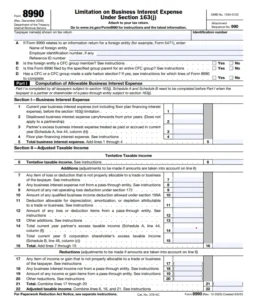
8990 Form
What Is Form 8990?
IRS Form 8990 is used to calculate and report limitations on business interest expense deductions under Section 163(j) of the Internal Revenue Code.
The IRS introduced these rules to limit the amount of deductible business interest expense certain taxpayers can claim annually.
If you are wondering what is Form 8990, the form essentially determines:
- Allowed business interest deductions
- Disallowed interest expenses
- Carryforward amounts
- Business interest income calculations
- Adjusted taxable income calculations
Businesses generally use Form 8990 when their interest expenses exceed specific thresholds or when Section 163(j) applies to their operations.
The form is commonly filed by:
- Partnerships
- Corporations
- S corporations
- Certain trusts
- Businesses with substantial debt financing
Because the calculations involve multiple tax adjustments, many businesses struggle with compliance initially.
Why Does the IRS Require Form 8990?
The purpose of IRS Form 8990 is to enforce business interest expense limitations. Without these rules, businesses could potentially reduce taxable income heavily through large interest deductions.
Section 163(j) limits the deduction amount using a formula tied to adjusted taxable income. Generally, deductible business interest expense is limited to:
- Business interest income
- 30% of adjusted taxable income
- Floor plan financing interest
Any excess interest expense may need to be carried forward into future tax years. These rules mainly affect businesses with:
Significant loans
- Debt-financed expansion
- Large interest obligations
- Complex partnership structures
For smaller businesses, exemptions may apply depending on average annual gross receipts.
Also Read: Understanding IRS Form 1040
Who Needs to File Form 8990?
Not every business must file Form 8990. However, businesses subject to Section 163(j) limitation rules usually need to complete the form.
Entities commonly required to file include:
- C corporations
- Partnerships
- S corporations
- Certain trusts and estates
Some small businesses may qualify for exemptions. Generally, businesses with average annual gross receipts below IRS thresholds may avoid filing requirements. However, exceptions and aggregation rules can complicate eligibility.
Certain industries may also have different treatment, including:
- Real estate businesses
- Farming businesses
- Regulated utility trades
Because exemption rules can become technical quickly, businesses often review eligibility carefully before filing.
What is the Structure of IRS Form 8990?
The structure of IRS Form 8990 becomes easier once you understand its three-part format. The form contains separate sections based on business type and reporting requirements.
Part I: Completed by All Taxpayers
Part I is mandatory for all taxpayers filing the form. This section calculates:
- Business interest expense
- Business interest income
- Adjusted taxable income
- Allowable interest deductions
- Disallowed interest carryforwards
This is the core calculation section within the form.
Part II: Partnerships Only
Part II applies specifically to partnerships. Partnerships use this section to calculate:
- Excess business interest expense
- Partnership allocations
- Interest limitation reporting for partners
Because partnership taxation already involves layered reporting rules, this section often creates additional complexity.
Part III: S Corporations Only
Part III applies only to S corporations. This section handles:
- Shareholder allocations
- Excess taxable income reporting
- Business interest limitation calculations
Businesses must complete only the sections relevant to their entity structure. One important section businesses often ask about is Form 8990 Schedule A.
What Is Form 8990 Schedule A?
Form 8990 Schedule A is used to report certain partnership excess taxable income and excess business interest expense allocations. Partnership structures often involve additional complexity under Section 163(j). That is why the IRS requires supporting schedules for detailed reporting.
Businesses generally use Form 8990 Schedule A to track:
- Partnership allocations
- Excess business interest expense
- Excess taxable income
- Excess business interest income
Partnerships and partners must report these amounts accurately to avoid inconsistencies during tax filings. Because partnership taxation rules already involve multiple layers, Schedule A calculations can become difficult without detailed financial records.
Also Read: What is the Schedule C Form
Step-by-Step Form 8990 Instructions
Understanding the official Form 8990 instructions becomes much easier when the process is broken into steps.
Step 1: Gather Financial Information
Start by collecting:
- Business interest expense records
- Interest income details
- Taxable income statements
- Partnership schedules
- Prior-year carryforward information
Accurate documentation matters because the calculations depend heavily on financial reporting accuracy.
Step 2: Determine Business Interest Expense
Next, calculate total deductible business interest expense for the year.
This may include:
- Loan interest
- Business credit interest
- Certain financing costs
Personal interest expenses generally do not qualify.
Step 3: Calculate Adjusted Taxable Income
Adjusted taxable income plays a major role in Section 163(j) limitations.
Businesses must adjust taxable income based on IRS rules before applying the limitation formula.
This step often creates confusion because adjustments may differ from standard book income calculations.
Step 4: Apply the Limitation Formula
Businesses generally calculate allowable deductions using:
- Business interest income
- 30% of adjusted taxable income
- Floor plan financing interest
If interest expense exceeds the limitation, the excess amount may carry forward.
Step 5: Complete Supporting Schedules
Businesses filing partnership-related adjustments may also complete Form 8990 Schedule A and other supporting sections.
Carefully reviewing allocations and carryforward amounts helps prevent reporting inconsistencies later.
What Are The Common Mistakes Businesses Make With Form 8990?
Many businesses struggle with the technical details inside the 8990 instructions. Some of the most common errors include:
- Incorrect adjusted taxable income calculations
- Missing carryforward amounts
- Improper partnership reporting
- Filing when exemptions apply
- Misclassifying interest expenses
- Incomplete supporting schedules
These mistakes can create delays, amended returns, or IRS notices. Businesses with complex financing structures often face the highest compliance risk. That is why accurate bookkeeping and tax-ready financial reporting become extremely important.
Why Businesses Outsource Complex Tax Reporting?
Tax compliance becomes more difficult as businesses grow. Interest limitation calculations add another layer of complexity.
Internal finance teams often juggle:
- Financial reporting
- Payroll management
- Tax preparation
- Compliance tracking
- Multi-entity accounting
As reporting obligations increase, businesses frequently seek outside accounting support.
Global FPO helps businesses manage bookkeeping, accounting operations, financial reporting, and tax-ready record maintenance.
Strong financial organization makes forms like IRS Form 8990 easier to prepare accurately and consistently.
Simplify Complex Tax Reporting Before Filing Season
Understanding Form 8990 is important for businesses handling interest expense deductions under Section 163(j).
The form helps determine allowable deductions, excess interest expense, and carryforward amounts. However, the calculations can become technical quickly, especially for partnerships and growing businesses.
Knowing what is Form 8990, understanding the official Form 8990 instructions, and reviewing supporting schedules carefully can help businesses avoid reporting errors later.
As compliance requirements continue growing, accurate accounting and organized financial reporting become increasingly valuable.
Need Help Managing Tax Reporting and Compliance?
Accurate financial records are essential for completing complex tax forms such as Form 8990. Global FPO provides outsourced accounting, bookkeeping, tax preparation, and financial reporting support to help businesses stay compliant and make informed financial decisions.
FAQs
Que: 1. What is Form 8990 used for?
Ans. Form 8990 calculates limitations on business interest expense deductions under Section 163(j).
Que: 2. Who must file IRS Form 8990?
Ans. Businesses subject to Section 163(j) limitation rules generally must file IRS Form 8990.
Que: 3. What are the official Form 8990 instructions?
Ans. The official Form 8990 instructions explain deduction limits, calculations, schedules, and filing requirements.
Que: 4. What is included in Form 8990 Schedule A?
Ans. Form 8990 Schedule A reports partnership excess taxable income and business interest allocations.
Que: 5. What happens to disallowed interest expense?
Ans. Disallowed interest expense may carry forward into future tax years.
Que: 6. Do small businesses need to file Form 8990?
Ans. Some small businesses qualify for exemptions based on annual gross receipts thresholds.
Que: 7. Why is adjusted taxable income important in IRS Form 8990?
Ans. Adjusted taxable income determines allowable business interest expense deduction limits.
Que: 8. How can Global FPO support tax reporting?
Ans. Global FPO supports bookkeeping, accounting operations, financial reporting, and tax-ready financial management.
Que: 9. Does Global FPO help businesses maintain financial records?
Ans. Yes. Global FPO helps businesses maintain organized accounting and reporting systems.
Que: 10. Why do businesses outsource complex accounting tasks to Global FPO?
Ans. Businesses outsource accounting support to improve reporting accuracy and reduce administrative workload.